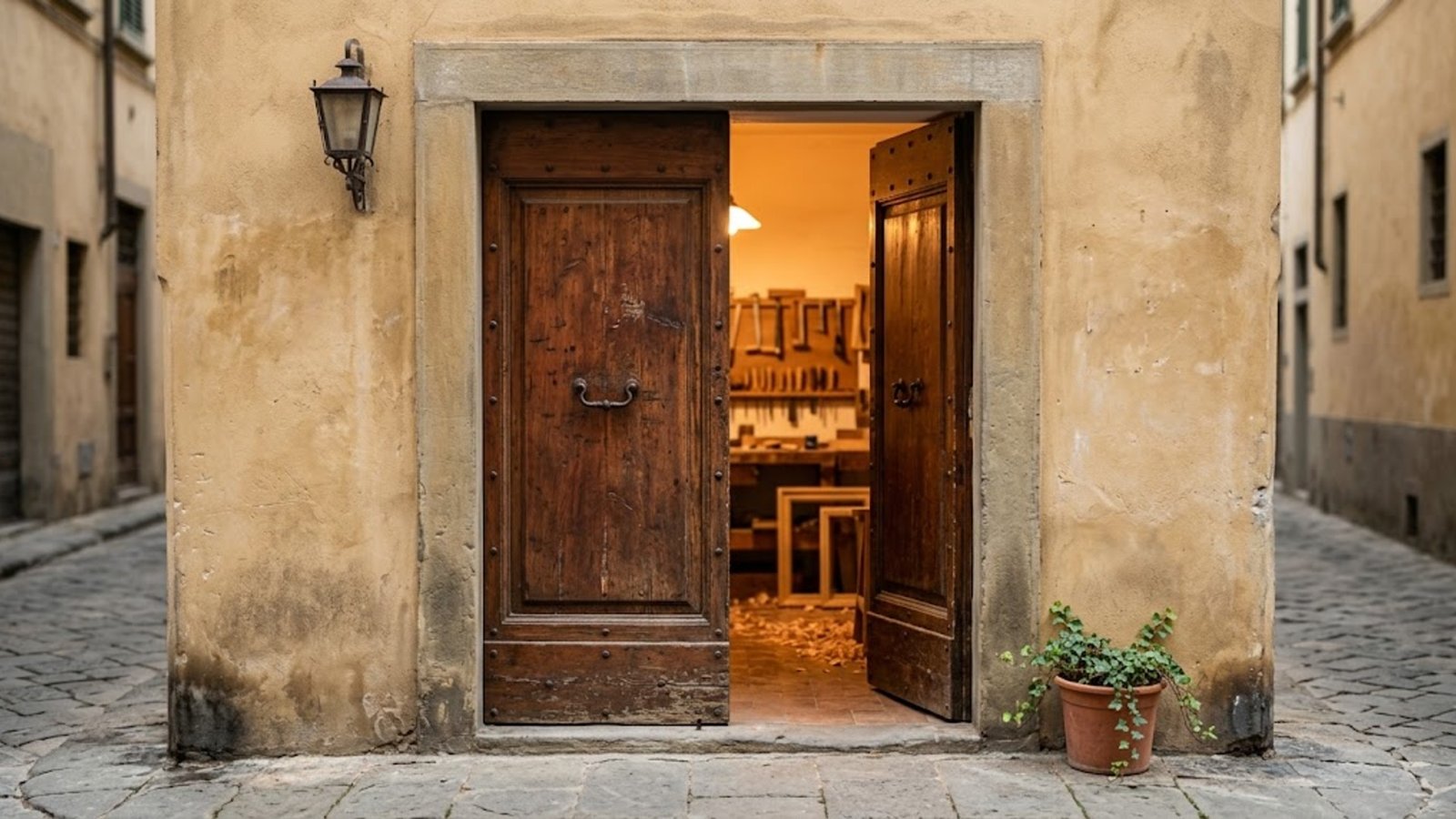
Across the Arno, between Porta San Frediano and Piazza del Carmine, lies the district Florence has always used for working: tanners, weavers, carpenters, gilders, restorers, and the working class that until the 1970s lived above the workshops. San Frediano has changed — the international guides discovered it, prices rose, many workshops became restaurants — but, unlike other “rediscovered” districts of Europe, it never stopped producing. This piece is a portrait of what remains, what has closed and what is new, written for those who want to take a guest to where Florence is made, not where it is looked at.
Part of our Florence series; for the city behind closed doors see three days in Florence for a principal.
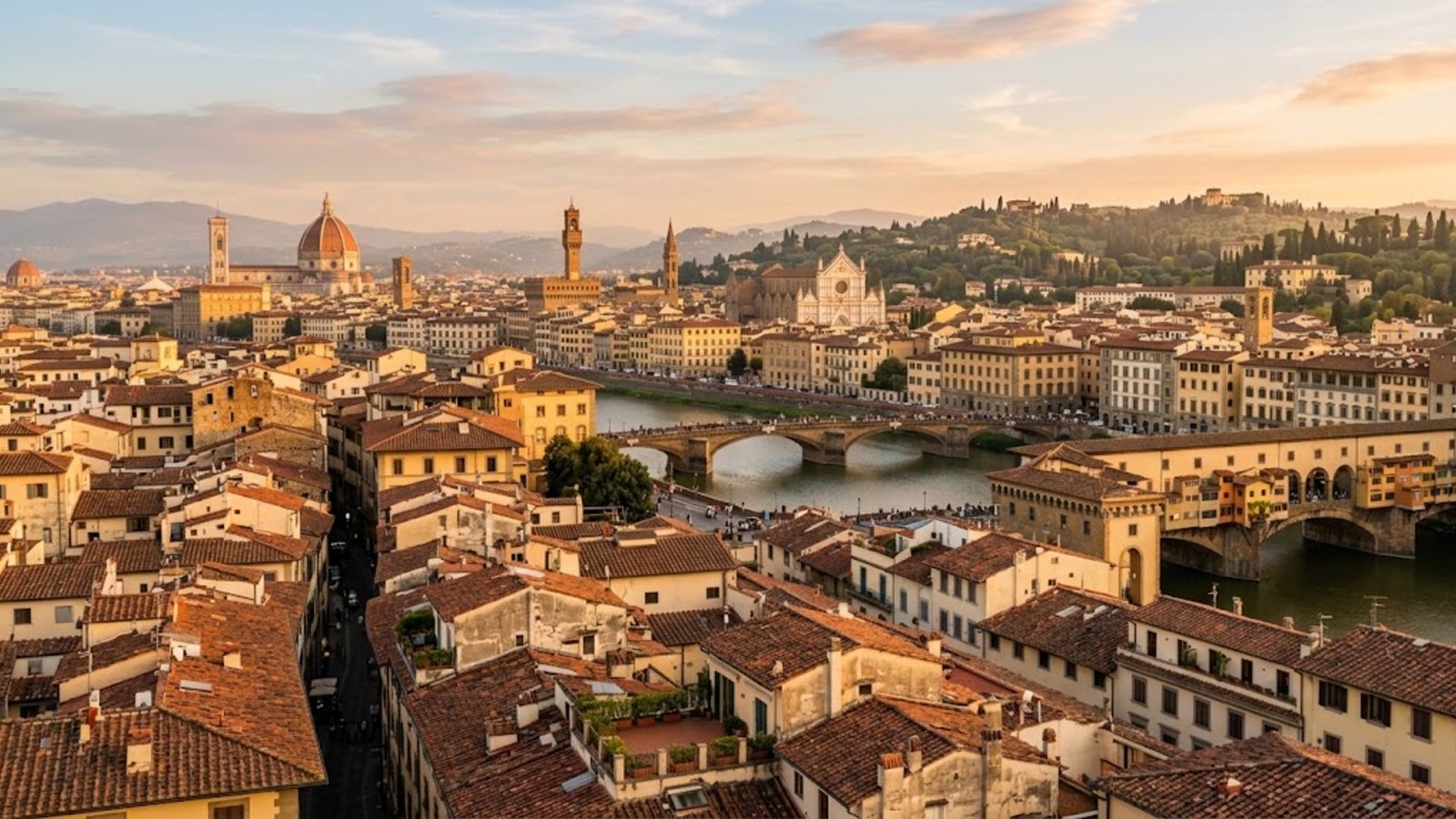
One reading from our own network on the same ground: ItalyPlanner’s Oltrarno guide. The way we work with tour operators and colleagues is set out in our network manifesto.
The geography
San Frediano is the western part of the Oltrarno: from Piazza del Carmine — with the Brancacci Chapel by Masaccio and Masolino — to Porta San Frediano, the last medieval gate still with its original doors; from Borgo San Frediano, the commercial axis, to Via dell’Orto, Via del Leone, Via Santa Monaca and the lanes running down to the Lungarno Soderini. To the east it borders Santo Spirito, the district of the square and Brunelleschi’s basilica, with which it forms the artisan Oltrarno; to the south it climbs towards Bellosguardo. It is small: crossed in a quarter of an hour, and in that quarter of an hour there are more working workshops than in any other square kilometre of Italy.
Who has stayed
- The artisans of leather, wood and metal. Gilded frames, furniture restoration, silversmiths, bookbinders, upholsterers: many workshops have carried the same sign for three generations, with the door open onto the street. They are not shops; whoever enters asks permission.
- The restorers. San Frediano and Santo Spirito host a unique density of restoration studios for paintings, sculptures and furnishings working for museums, churches and private collections; some receive visitors, by introduction.
- The neighbourhood trattorias. Sabatino, on Via Pisana, with the prices and dishes of sixty years ago; the trattorias of Borgo San Frediano and Via de’ Serragli where workers and lawyers still lunch; the bread, the pastry shops, the gelaterie the Florentines defend.
- The church of the Carmine and the Brancacci, of course; but also San Frediano in Cestello, with its baroque dome on the Arno, and Santa Maria del Carmine seen from the cloister.
Who has closed, and why
Over the last decade the district has lost dozens of workshops: rents driven up by tourist demand, workshops turned into short-let apartments, artisans without heirs. It is a phenomenon the City has tried to contain with regulations on commerce and short-term rentals in the historic centre, with partial results. The consequence for visitors: the “cool” San Frediano, made of cocktail bars and concept stores, is real but thin; the San Frediano that works is still there, one doorway further on, and must be sought with someone who knows it.
What is new
Not everything that has arrived is a bar. Workshops of young artisans have opened — goldsmiths, ceramicists, leather designers — who chose the district precisely for its tradition; galleries that show restorers alongside artists; restaurants that have brought Tuscan cooking to a level the district did not have, while remaining trattorias at heart. Il Santo Bevitore, to name one, played a role in this transformation and remains a reference point. The rule for telling them apart: whoever works by day with the door open belongs to the district; whoever opens at six in the evening does not.

For the high-end guest
San Frediano is the district we propose to those who have already seen the Uffizi and want the Florence of hands. The reference afternoon: the Brancacci in the first afternoon slot, then three workshops — a gilder, a restorer, a leather artisan — visited by appointment with someone who knows them, a coffee at a neighbourhood pastry shop, the last hour at Porta San Frediano as the sun drops onto the walls, and dinner at a trattoria with the table only a Florentine name obtains. Nothing is bought, unless the guest wishes; people are met. It is the opposite of shopping, and worth more.
Frequently asked questions
Are San Frediano and Santo Spirito the same district?
They are two adjoining districts of the Oltrarno: Santo Spirito around the square and basilica, San Frediano further west up to the gate. Together they form the artisan Oltrarno.
Can the workshops be visited?
Many yes, respectfully and asking permission; the best are visited by appointment through those who know them.
Is the district safe in the evening?
Yes: it is a residential, lively district, with trattorias and bars frequented by Florentines.
What is the best time?
Weekday afternoons, when the workshops are open; on Sundays the district sleeps.
Portrait based on the editorial team’s direct experience; the businesses mentioned are indications, not advertising, and should be checked before visiting. For the Brancacci Chapel: Florentine Civic Museums.
TourLeaderPro Network — contact us for San Frediano with those who know it by name.