
The guest we are talking about has already seen Florence four or five times. They have queued at the Uffizi, seen the David, dined with a view of the Ponte Vecchio. They do not need a guide: they need someone to give them the city back without a public, with the people who make it live and at a pace that respects their time. This is the template programme for three days in Florence that an advisor builds for a principal, a family office or a high-end guest. It is not a package: it is a curator’s template, to be rewritten every time around a person.
One reading from our own network on the same ground: ItalyPlanner’s three-day Florence itinerary. The way we work with tour operators and colleagues is set out in our network manifesto.
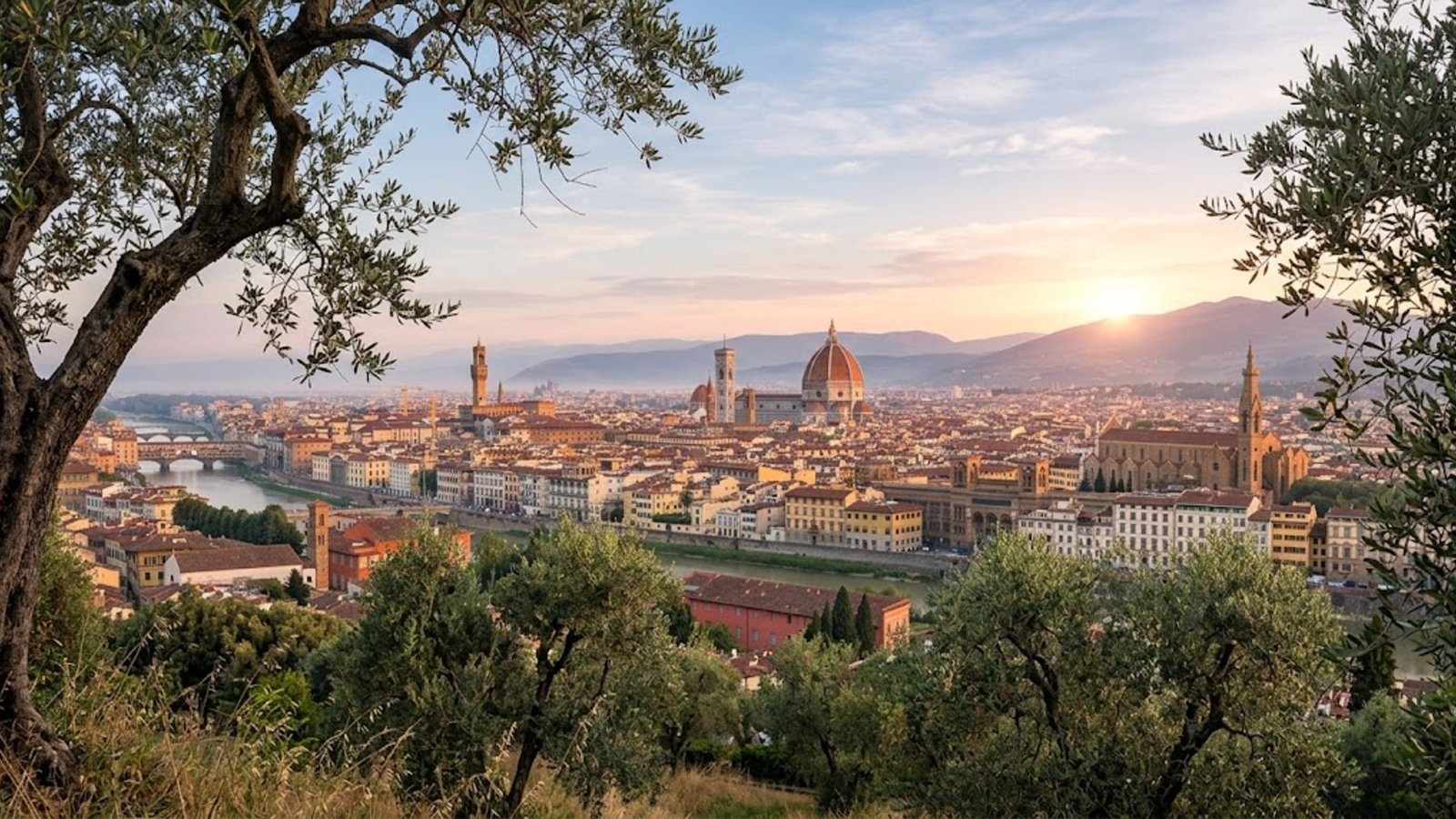
Three days in Florence: the principles before the itinerary
- One major place a day, always outside opening hours or with reserved access. The rest is time, not attractions.
- People, not tickets. Every stop has a name: the curator, the artisan, the hostess, the prior. It is the person who makes the experience unrepeatable.
- Walking distances with a car available but invisible; Florence is crossed in twenty minutes and the guest must be able to do so.
- No first Sunday of the month, no long weekends. The calendar of free museum days in Florence serves to avoid, not to choose.
- One empty afternoon in the programme. The discerning guest fills it alone, or does not fill it: it is the rarest luxury.
Day 1 — The Renaissance behind closed doors
| Time | What | Why |
|---|---|---|
| 7:45 | Uffizi before opening, with a curator of the collections | the Tribuna and the Botticelli corridor in silence: what no ticket buys |
| 10:30 | Vasari Corridor, limited access | reopened at the end of 2024 with restricted entry: booked weeks ahead through reserved channels |
| 13:00 | Lunch in a private home in the Oltrarno | the hostess, not the restaurant: the conversation is the main course |
| 16:00 | Free afternoon; car available | time for the guest, with no programme |
| 18:30 | Officina Profumo-Farmaceutica di Santa Maria Novella, reserved visit to the historic rooms | an institution founded in 1612 seen with someone who knows it, without the crowded shop |
| 20:30 | Dinner in a family palazzo with the owners | a palazzo that opens only by introduction |
Day 2 — The hands of Florence
| Time | What | Why |
|---|---|---|
| 9:00 | Medici Chapels at opening with an art historian | Michelangelo’s New Sacristy before the groups |
| 10:30 | Atelier closed to the public: a silversmith, a bookbinder or an embroiderer around Via Maggio | Florentine craftsmanship seen in the workshop, not in the window |
| 12:30 | Antico Setificio Fiorentino or Scuola del Cuoio, by appointment | eighteenth-century looms at work; leather worked as in the fifteenth century |
| 13:30 | Lunch at a neighbourhood trattoria, reserved table | the Florentines’ Florence |
| 16:00 | Brancacci Chapel, limited booking | Masaccio in a chapel that admits few visitors per slot |
| 18:00 | San Miniato al Monte for the monks’ vespers in Gregorian chant | the Romanesque basilica at sunset, with the community that inhabits it; time to check with the abbey |
| 20:30 | Dinner at a villa in the hills of Fiesole or Settignano | the view of the city from where Florentines have always looked at it |
Day 3 — Out of the centre, into Tuscany
| Time | What | Why |
|---|---|---|
| 9:00 | A Medici villa opened on request (Castello, Petraia or Poggio a Caiano) with the director | the Italian gardens and the rooms of a dynasty |
| 11:30 | A family winery in Chianti Rufina or Chianti Classico, with the owner | the family cellar, not the tasting room |
| 13:30 | Lunch on the estate | what is eaten around the producers’ table |
| 16:30 | Return; Galleria dell’Accademia outside public hours, if the guest wishes | the David with no one in front of it: booked in advance through the institution |
| 20:00 | Last evening free, or a private concert in a historic hall | the guest decides the closing |
What it costs, and what it is worth
A programme like this has no list price: it depends on which doors open and on who opens them. Reserved openings of the major museums carry institutional fees ranging from a few hundred to several thousand euros; private homes and ateliers open through relationships, with an acknowledgement the advisor handles discreetly. What the guest really pays for is the months of work behind three days without waiting, without crowds and without mistakes. That is why the advisor is paid for time, not for tickets. If you need to build a programme like this for your own clients, see how bespoke tour design works for tour operators and travel agencies.
For the advisor
- Start at least three months ahead for institutional openings; six for the Vasari Corridor and the villas.
- Check the dates: never the first Sunday of the month, never long weekends, never Pitti Uomo weeks (January and June) unless the guest is there for that.
- A backup contact for every stop: in Florence people matter more than institutions, and people fall ill.
- Give the guest a single sheet: times, names, nothing else. The rest is invisible work.
The people who make a good trip possible work in the field, not in an office: tour escorts, licensed tourist guides (the only ones allowed to explain monuments and sites), NCC chauffeurs. In the TourLeaderPro network you will find hundreds of these independent professionals: the tour operator or the traveller chooses them and contacts them directly. TourLeaderPro is not an agency and does not sell tours.
Template programme based on the editorial team’s experience; times and availability of reserved openings change and must be checked with the individual institutions (Uffizi Galleries, Ministry of Culture, City of Florence – Civic Museums). References to private homes and ateliers are deliberately unnamed.
Daniele Dezi — I am a licensed tour escort (accompagnatore turistico) in Rome. If you need someone to accompany your group, or advice on planning the itinerary, write to me: I reply within 48 hours.