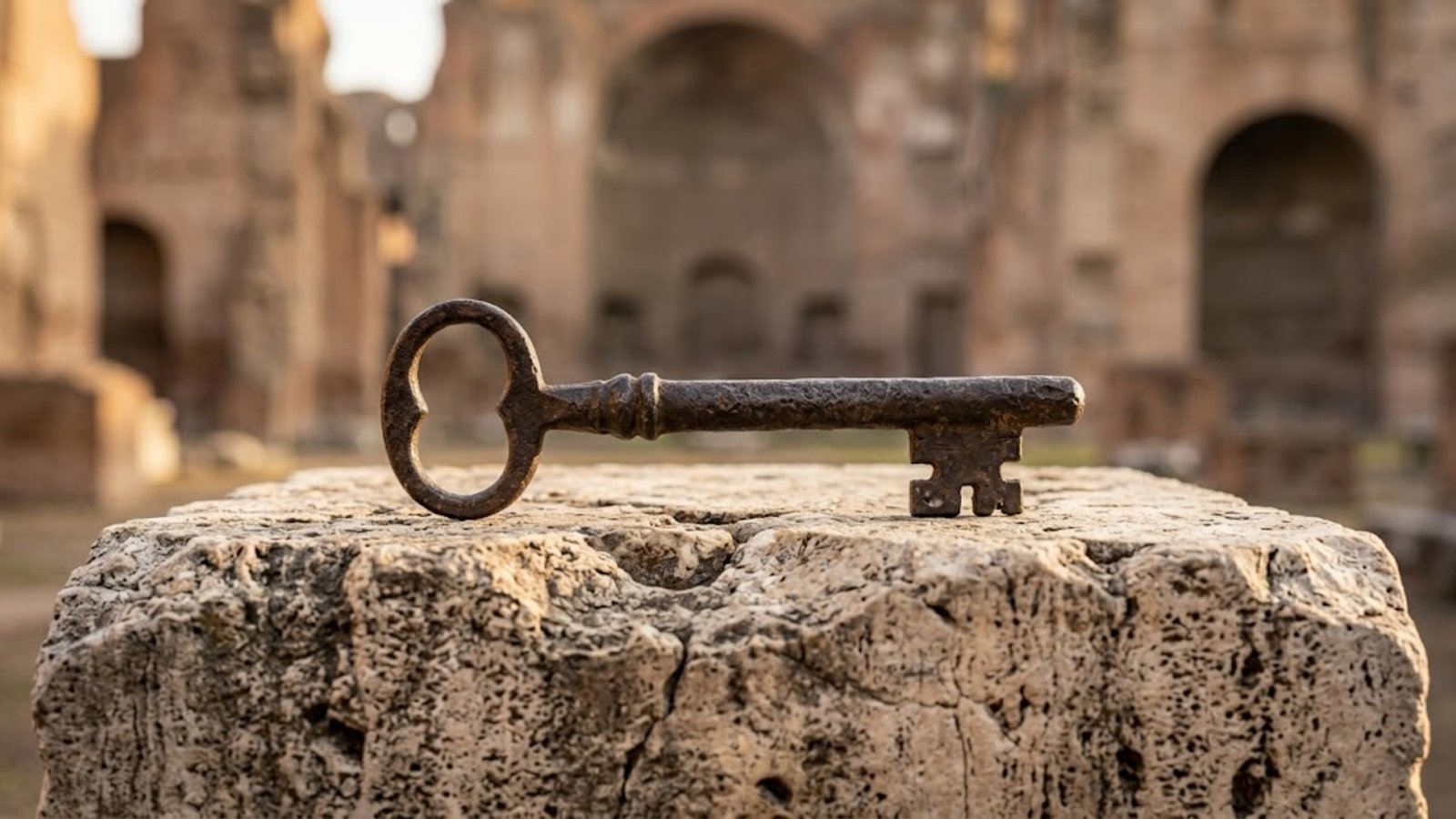
There is a key, and it is real. Not the golden key of the stories: an iron key, heavy, that someone turns every morning in a gate on Viale delle Terme di Caracalla, an hour before the visitors arrive. From that moment until nine, the Baths of Caracalla — eleven hectares of imperial brick built between 212 and 216, the largest bath complex in Rome still standing — belong to a handful of people: the one who opens, the one who checks, the one who cleans, the one who tends the plants. This piece is about that hour, and about why we bring here, before any other place, the guests who want to understand Rome.
How we work with tour operators and colleagues is set out in our manifesto: No One Sells Italy Alone.
Two readings from our own network on the same ground: ItalyPlanner’s Baths of Caracalla guide and the Baths page on EstateRomana.
Part of the Behind the Scenes series; the first piece is Rome at four in the morning.
The round
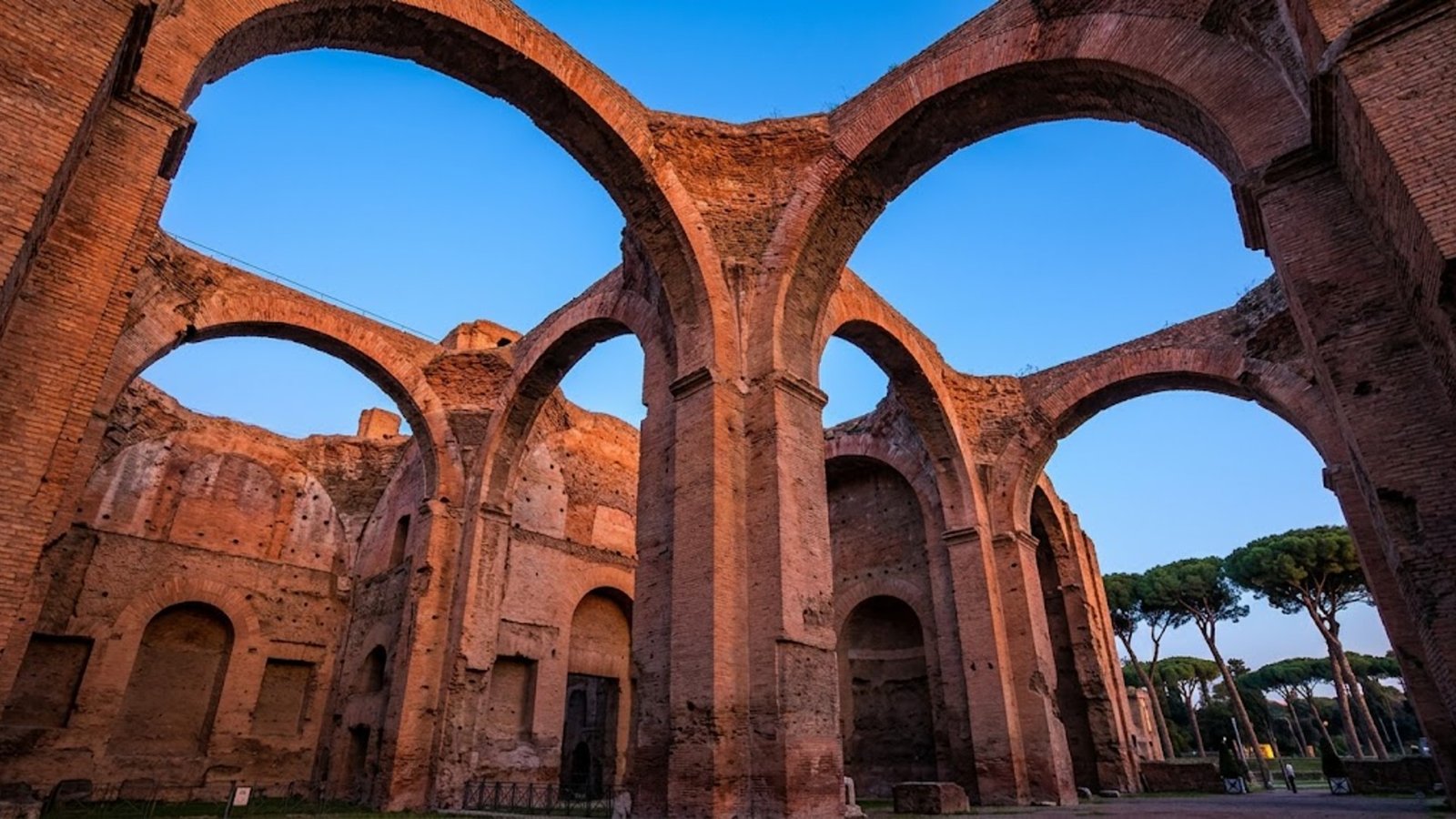
Whoever opens an archaeological site does not simply switch on the lights. They make a round. They check that no one got in during the night, that the storm did not bring down a piece of cornice, that the inner gates are as they were left. At the Baths the round is long: the frigidarium with its collapsed vaults, the open-air natatio, the round caldarium visible from the avenue, the gymnasia with their mosaics, the underground tunnels where slaves ran with wood for the furnaces. The custodian walks in silence and looks up; it is the gesture that, after years, we recognise in anyone responsible for an ancient place. They look up because that is where problems come from: invasive plants, seepage, bricks flaking with the frost.
The gardeners
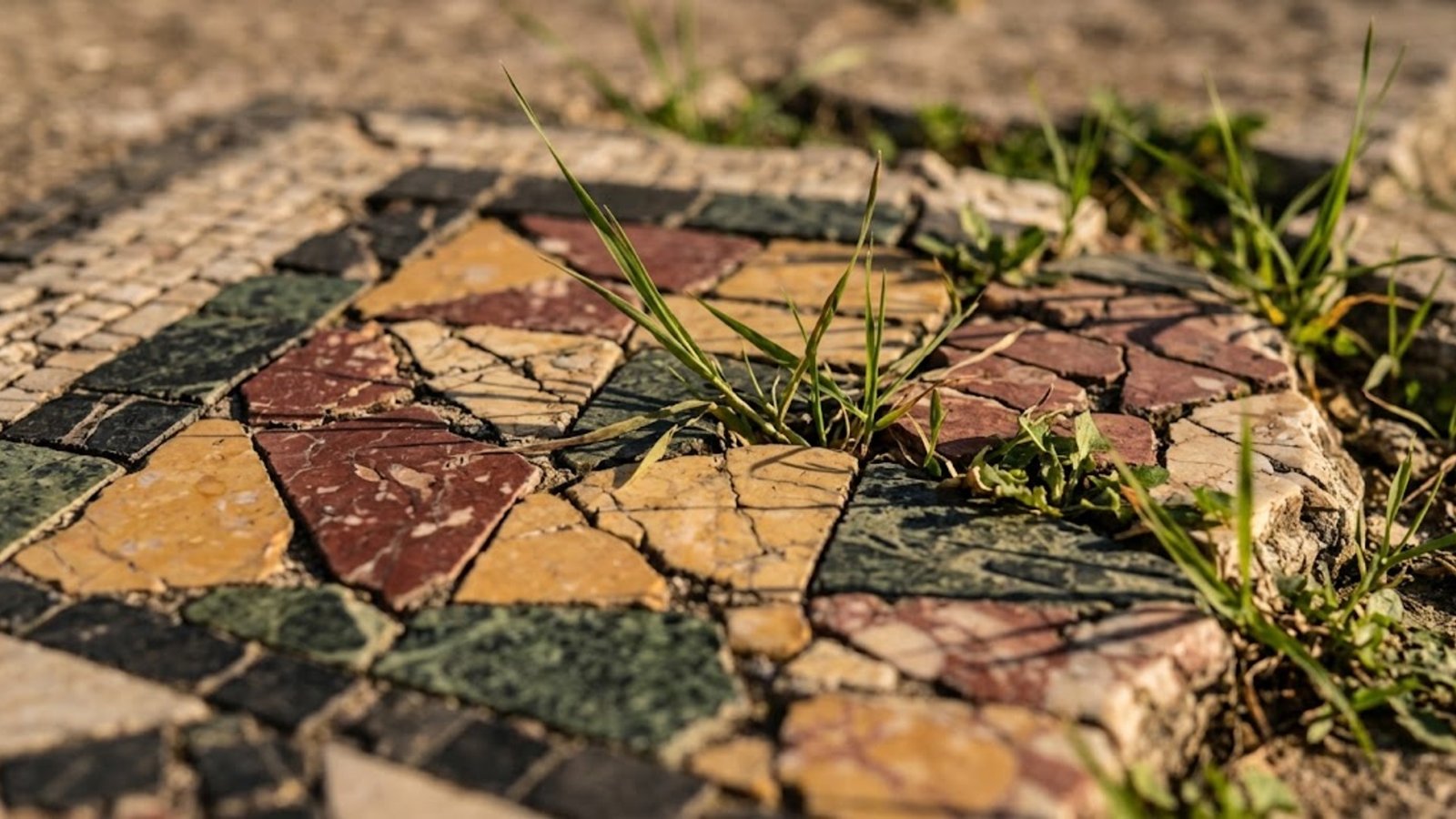
Few know that the Baths are also a garden: the cypresses, the laurels, the pines that Rome planted among the ruins in the 1930s, and the lawn of the natatio that in summer hosts the opera stage. The gardeners arrive early, before the heat, and work among the walls with the same ease as in a vegetable garden. One of them, years ago, pointed out to us a capital rising from the grass where every spring a plant flowers that no one planted. It has no sign. It is for this kind of thing that audio guides do not exist.
The light
Between half past seven and half past eight, in autumn, the sun clears the Aventine and strikes the north wall of the caldarium, which turns orange while the rest of the Baths is still in shadow. Whoever has seen the Baths only in the flat light of noon has not seen them. For half an hour the walls seem still clad in the marbles the popes carried off to build their churches, and one understands the effect they must have had on those who entered in the third century, with the pools full and the statues — the Hercules and the Farnese Bull, today in Naples — in their niches.
The nine o’clock rite
At nine the main gate opens to the public. It is not a solemn moment: a guard, a ticket seller, the first visitors with backpacks. But there is, every day, an instant in which the place passes from private to public, and whoever has seen it from inside knows that the Baths of one minute before and those of one minute after are not the same place. The advisor who brings a guest to an early opening is not selling one more ticket: they are selling that minute.
The rules
- Early openings are requested well in advance from the Superintendency responsible for the Baths, for small groups, with serious reasons and a licensed guide.
- The people working at the opening are not part of the show: one greets them, thanks them, does not photograph them.
- In summer, with the Teatro dell’Opera di Roma’s season, the site changes: stage, stands, hours. It is another experience, magnificent, but not this one.
- Public hours change with the season: always check the official website.
For the high-end guest
We propose the Baths of Caracalla at dawn as the first experience of Rome, before the Colosseum and the Forum: because they are empty, because they are immense, because with someone who knows them they tell of the Empire better than any museum, and because the rite of the opening — the key, the round, the light — is something the guest does not forget. Then breakfast at a bar on the Aventine, and the day can begin.
The people who make a good trip possible work in the field, not in an office: tour escorts, licensed tourist guides (the only ones allowed to explain monuments and sites), NCC chauffeurs. In the TourLeaderPro network you will find hundreds of these independent professionals: the tour operator or the traveller chooses them and contacts them directly. TourLeaderPro is not an agency and does not sell tours.
A piece from the Behind the Scenes series, based on the editorial team’s direct experience. Hours, tickets and special openings are published by the Special Superintendency of Rome and on cultura.gov.it.
Daniele Dezi — I am a licensed tour escort (accompagnatore turistico) in Rome. If you need someone to accompany your group, or advice on planning the itinerary, write to me: I reply within 48 hours.