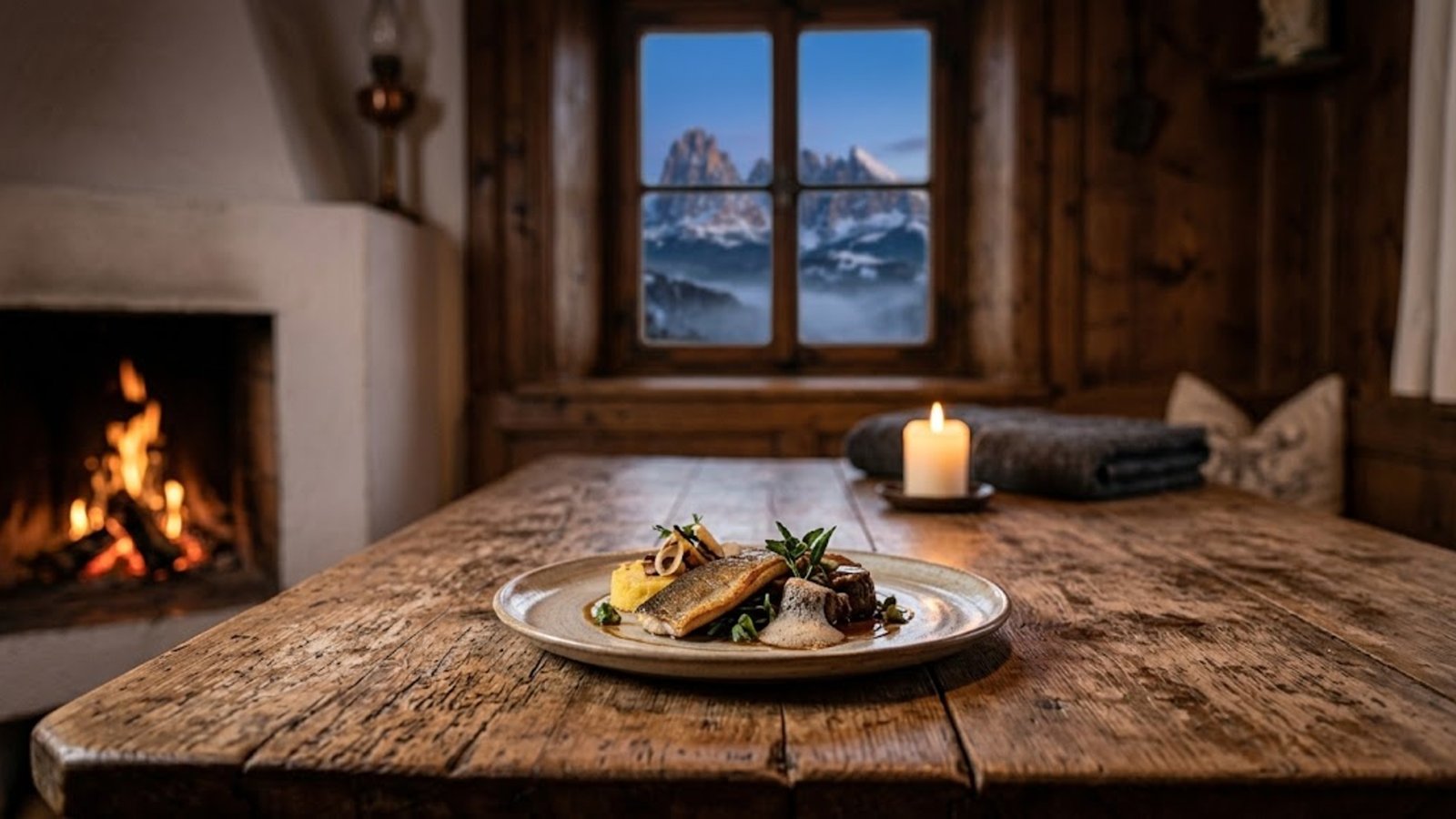
In the Dolomites, the mountain hut is no longer just the place where you eat a plate of canederli with your ski boots on: today there are real gourmet huts in the Dolomites. In a band between 2,000 and 2,800 metres, between Cortina, Alta Badia and Val Gardena, a world of hut-restaurants has grown up over the last twenty years, with serious cellars, refined cooking and — what matters most to a discerning guest — the possibility of dining and sleeping at altitude, when the lifts are closed and the mountain is empty. This TourLeaderPro guide explains which they are, how to reach them and how to book. It pairs with our piece on Alta Badia, the real luxury Dolomites.
One reading from our own network on the same ground: ItalyPlanner’s Dolomites hikes. The way we work with tour operators and colleagues is set out in our network manifesto.
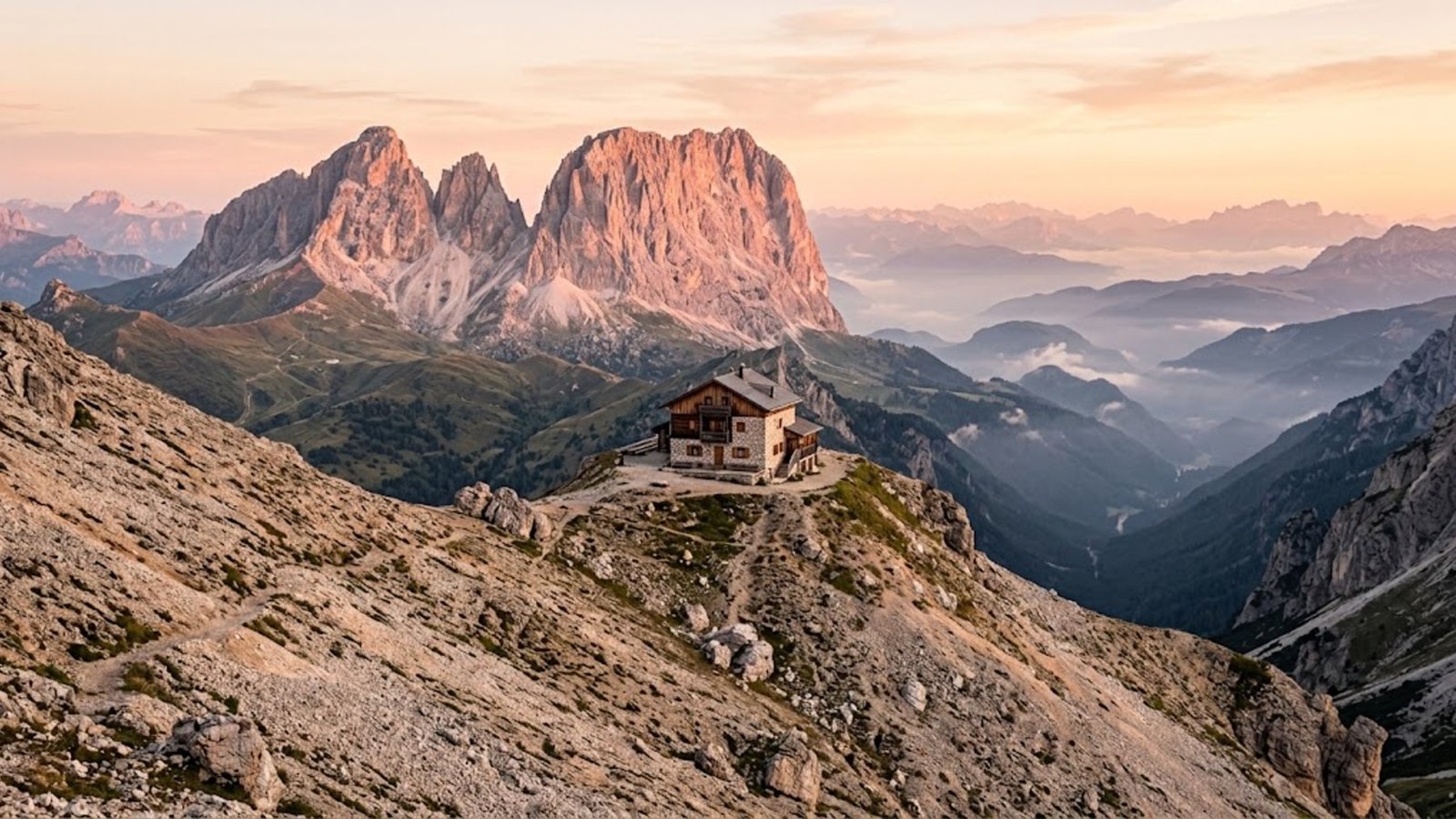
What makes a hut worthy of the name
Three things set it apart from a classic Alpine hut: a kitchen that uses the valley’s produce with restaurant technique, a cellar that has no reason to exist at 2,500 metres and yet does, and the evening: dinner after the lifts close, reached by snowcat, snowmobile or on foot, often with an overnight stay in rooms that have nothing of the old dormitories. The daytime public is the one from the slopes; the evening public is the one that booked weeks ahead.
Gourmet huts in the Dolomites: the names that count
| Hut | Area and altitude | How to get there | Why |
|---|---|---|---|
| Rifugio Lagazuoi | Passo Falzarego, 2,752 m — Cortina’s highest | Lagazuoi cable car from the pass; in summer also on foot through the Great War tunnels | the most panoramic terrace in the Dolomites, sauna at altitude, dinner and night with views of the Tofane and Marmolada; about a hundred seats |
| Rifugio Averau | Nuvolau – Cinque Torri, about 2,400 m | chairlifts from Passo Falzarego/Bai de Dones and a walk; in winter snowcat on request | family cooking with ambition, a notable cellar, one of the most sought-after tables in the Ampezzo valley |
| Rifugio Scoiattoli | Cinque Torri, about 2,250 m | chairlift from Bai de Dones | at the foot of the Cinque Torri, between the open-air Great War museum and sunset over the Lagazuoi; dinners on request |
| Rifugio Col Gallina | Passo Falzarego, about 2,050 m | on foot from the pass or the road | more intimate, careful Ampezzo cooking; ideal for a long lunch facing the Lagazuoi |
| The Alta Badia «ütia» (Piz La Ila, Piz Sorega, Pralongià) | Alta Badia, 2,000–2,100 m | gondolas from La Villa and San Cassiano; in the evening snowcat or snowmobile | Ladin tradition reinterpreted; snowcat dinners among the most requested in the Dolomites |
| The huts of the Seceda and the Alpe di Siusi | Val Gardena, 2,000–2,400 m | Seceda cable car from Ortisei; Alpe di Siusi gondola | fine cooking with views of the Odle; the Sassolungo at sunset from the terrace |
Altitudes and lifts are indicative and should be checked; chefs, menus and evening openings change from season to season, and in some cases from year to year. One rule applies to all: book, and book early.
How you really get there
- By lift, in the daytime: cable cars and chairlifts reach almost all the huts mentioned; lunch at altitude is within reach of anyone who can sit on a chairlift.
- On foot, in summer: the Lagazuoi through the Great War tunnels, the Averau from Passo Giau or the Cinque Torri, the Seceda from the trails above Ortisei: real hikes, with a mountain guide for an untrained guest.
- In the evening, in winter: snowcat or snowmobile organised by the hut, with limited places and compulsory booking; the only way to have the mountain empty.
- By helicopter: possible in some areas with authorised landing spots; an option the advisor weighs case by case, mindful of the rules and respect for the place.
For the high-end guest
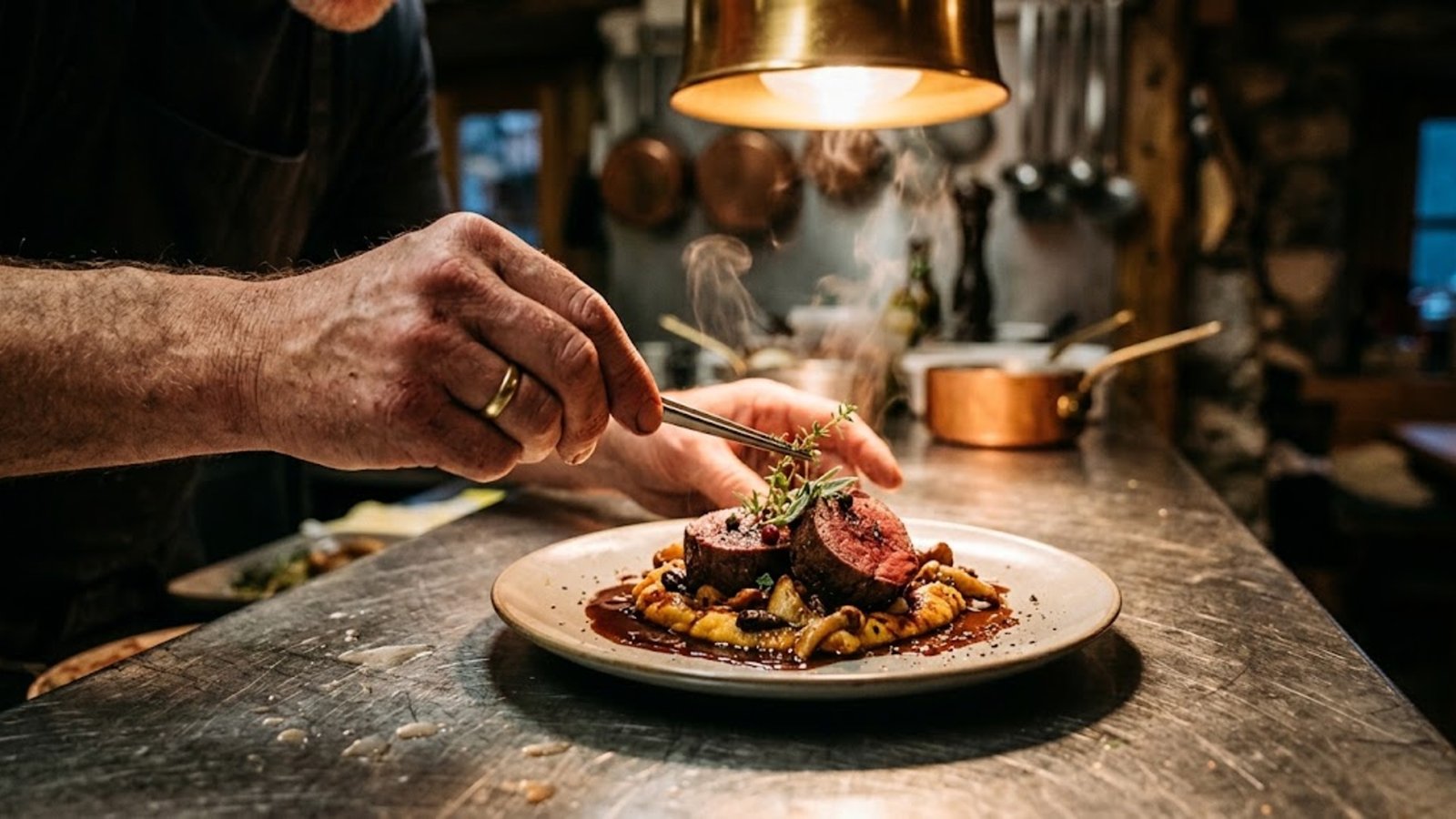
Only one formula never disappoints: dinner and a night at altitude. You go up on the last lift or by snowcat, dine while the valley goes dark, sleep at 2,700 metres and come down in the first light, before the lifts open. The Lagazuoi, with its sauna and terrace, is the most spectacular place to do it; Alta Badia offers Ladin dinners with snowcat ascent; the Averau the table for wine lovers. The advisor books months ahead, checks the weather the day before and always has an alternative plan in the valley. For tour operators adding a night up high to a programme: how bespoke tour design works.
Frequently asked questions
Can you dine at a hut after the lifts close?
Yes, at many huts, with an organised snowcat or snowmobile ascent and compulsory booking; places are limited.
Can you stay overnight?
At several huts yes, in modern rooms; the Lagazuoi, for instance, includes dinner for overnight guests. Book well in advance.
When are they open?
Usually in the ski season (December–April) and the summer season (June–September/October); between seasons many close.
Do you need to ski?
No: the lifts carry pedestrians to almost all the huts mentioned, and in the evening you go up by tracked vehicle.
The people who make a good trip possible work in the field, not in an office: tour escorts, licensed tourist guides (the only ones allowed to explain monuments and sites), NCC chauffeurs. In the TourLeaderPro network you will find hundreds of these independent professionals: the tour operator or the traveller chooses them and contacts them directly. TourLeaderPro is not an agency and does not sell tours.
Sources verified on 3 September 2026: Rifugio Lagazuoi – official website; Cortina Dolomiti – huts. Menus, chefs, altitudes, openings and lifts change: always check with the individual huts.
Daniele Dezi — I am a licensed tour escort (accompagnatore turistico) in Rome. If you need someone to accompany your group, or advice on planning the itinerary, write to me: I reply within 48 hours.