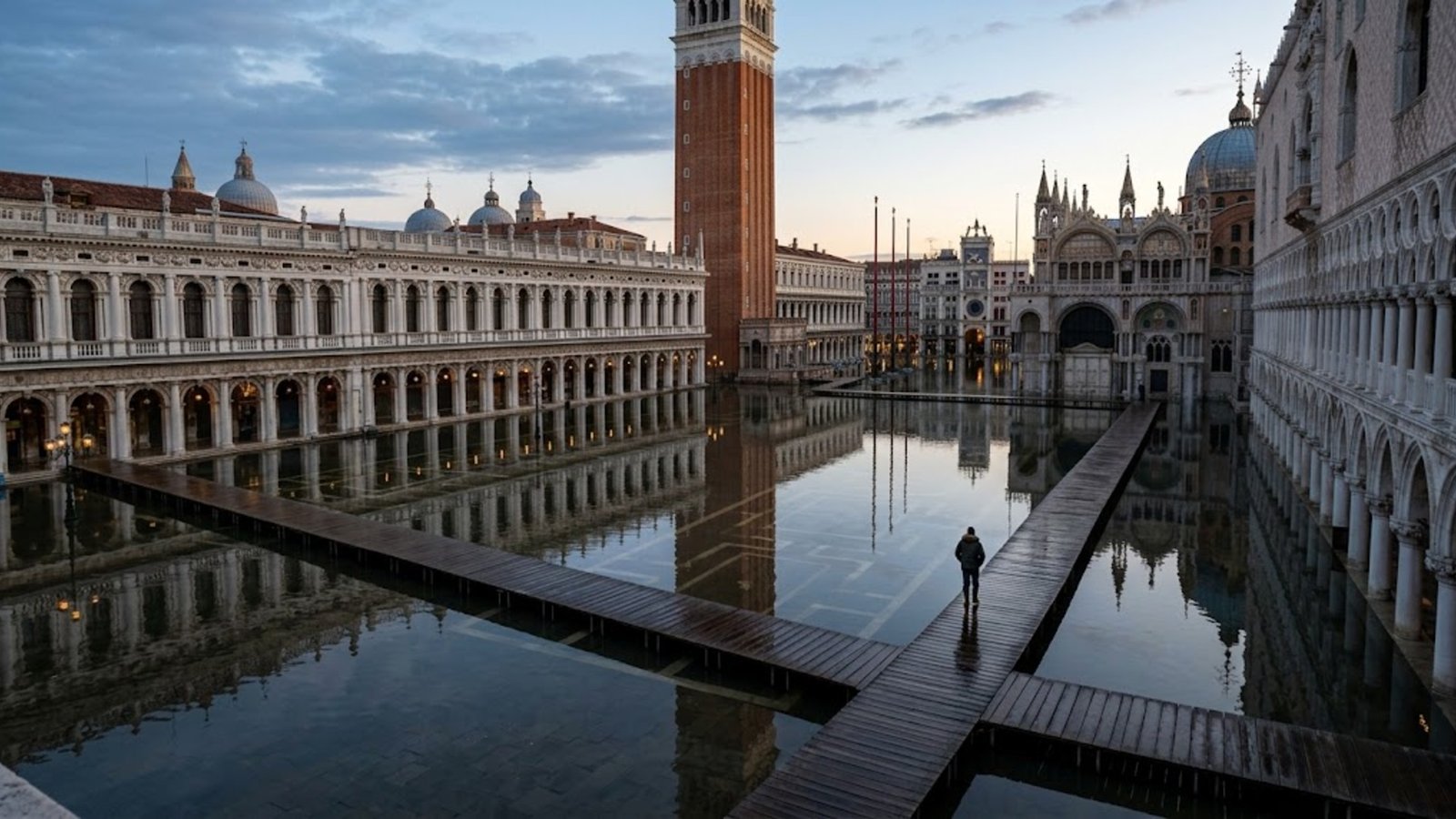
For a visitor acqua alta, high tide, is an incident: the walkways, the plastic boots, the photo in St Mark’s Square with the Basilica reflected. For a Venetian it is a calendar, a language, a century of daily adaptations that the guidebooks do not tell because they do not see them. This piece is a walk in high water with a Venetian historian — or rather, with what we have learned over years of walks with Venetian historians — about how the city has lived with the tide, what has changed with the MOSE and what is lost by not looking down.
Part of our Venice series; for museums and rules, free museums in Venice.
One reading from our own network on the same ground: ItalyPlanner’s Venice itinerary. The way we work with tour operators and colleagues is set out in our network manifesto.
The words, before the centimetres
High water is measured in centimetres above mean sea level at the Punta della Salute tide gauge, and Venetians speak of it as sailors speak of the wind: “105 tonight”, “they’re giving 120 tomorrow”. St Mark’s Square, the lowest point of the city, begins to get wet already a little below 90 centimetres; at 110 the City considers the event significant, at 140 exceptional. The sirens sounding from the bell towers — one tone for each threshold, from 110 upwards — are the first signal, and whoever hears them for the first time understands they are in a place that talks with the tide.
A century of adaptations
- The walkways. The City lays wooden platforms along set routes when the tide passes a threshold: they are a network, with a map, and Venetians know it by heart. Those walking on them do not see that the walkways follow the ancient routes linking the sestieri.
- The flood boards. Every ground-floor door has, or has had, a metal or wooden board to slot into the stone guides on either side: a centuries-old practice, often invisible because the guides are worn and the boards kept in the entrance hall.
- The ground floors. The Venetian ground floor has been, for centuries, a service floor: storeroom, hallway, not a dwelling. The houses that turned it into apartments did so against the logic of the city, and high water reminds them.
- 1966 and 2019. The two dates every Venetian knows: 4 November 1966, 194 centimetres, the city under water for a day and a night; 12 November 2019, 187 centimetres, the second highest in recorded history. The first gave rise to the international committees for Venice; the second accelerated the MOSE.
- The raised pavements. In many campi and calli the level of the paving has been raised in recent decades; you can tell from the church steps that have “sunk” and the doorways that now open below street level.
The MOSE and the city that changed rhythm
Since October 2020 the MOSE gates at the three inlets rise when the forecast tide exceeds a set threshold, and Venice has stopped flooding on high-tide days. It is a historic and ambiguous change: the city is protected, but the calendar that governed life — the walkways, the boots, the boards — has almost stopped for medium tides, and with it part of the culture of adaptation. What remains are the below-threshold tides, which still wet St Mark’s, and the glass barrier installed around the Basilica to protect it from the lower waters. Whoever walks in high water today walks in a rarer and more controlled event: one more reason to do it with someone who remembers how it was.
What you see only by walking low
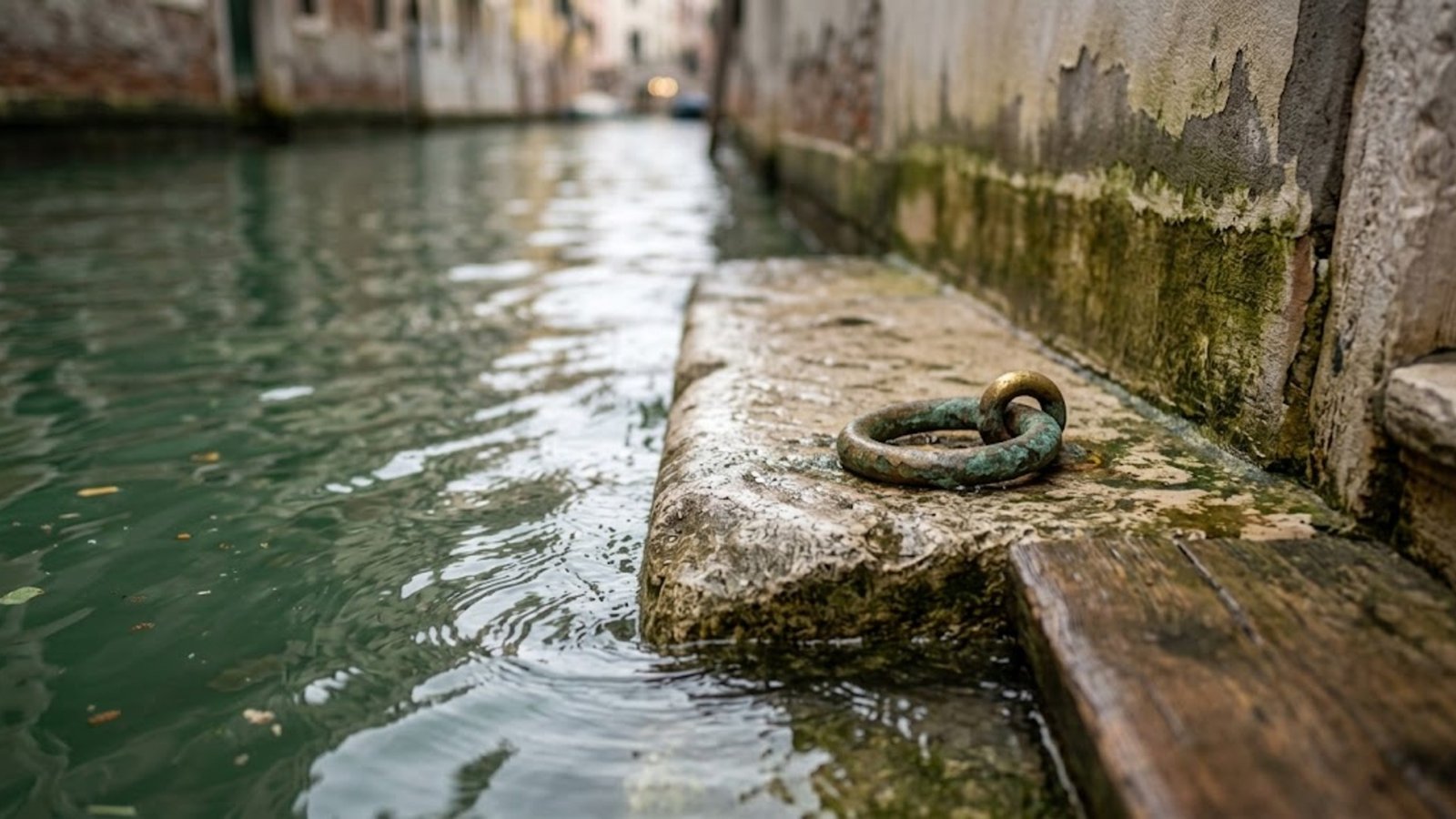
The level marks carved or painted on the walls of the calli, with dates; the Istrian stone of the plinths, chosen because it resists salt; the iron “masks” on doorways that hold the boards; the house jetties that rise with the tide; the shopkeepers lifting their goods onto the shelves at eight in the morning while looking at their phones; the way Venetians walk on the walkways, in line, without stopping to photograph. It is an hour of anthropology, and worth more than many museums.
When and how
- Season: October to January, with November as the peak month; tides are forecast days ahead by the City’s Tide Centre.
- Time: high water lasts a few hours around the peak; the walk is arranged the day before, around the forecast peak time.
- Equipment: tall boots, not the plastic overshoes from the street sellers; the advisor has them waiting at the hotel.
- With whom: a historian or a Venetian who lived through 1966 or 2019, and who can read the walls.
For the high-end guest
The experience we propose is a high-water morning with a historian, starting from St Mark’s at peak hour and ending in a private house where the flood board is still in use and the ground floor tells a century; then a coffee in the warm while the city dries. It is not a “beautiful” experience in the postcard sense: it is a true one, and the guests who have done it mention it before the Biennale and the Doge’s Palace.
Frequently asked questions
Does Venice still flood?
Yes, with tides below the MOSE’s operating threshold, which wet St Mark’s Square and the lowest points; the great high waters are now blocked by the gates.
When does high water occur?
Mainly between October and January, with forecasts published by the City of Venice’s Tide Centre.
Can you walk in high water?
Yes, with tall boots and following the walkways; it is one of the city’s most authentic experiences.
What are the sirens?
The city’s alert system: different tones for the different tide thresholds, from 110 centimetres upwards.
Piece based on the editorial team’s direct experience. Forecasts and thresholds: Tide Forecasting and Reporting Centre – City of Venice; on the MOSE, Consorzio Venezia Nuova / MOSE. Operating thresholds may be updated: check.
TourLeaderPro Network — contact us for Venice in high water with those who know it.