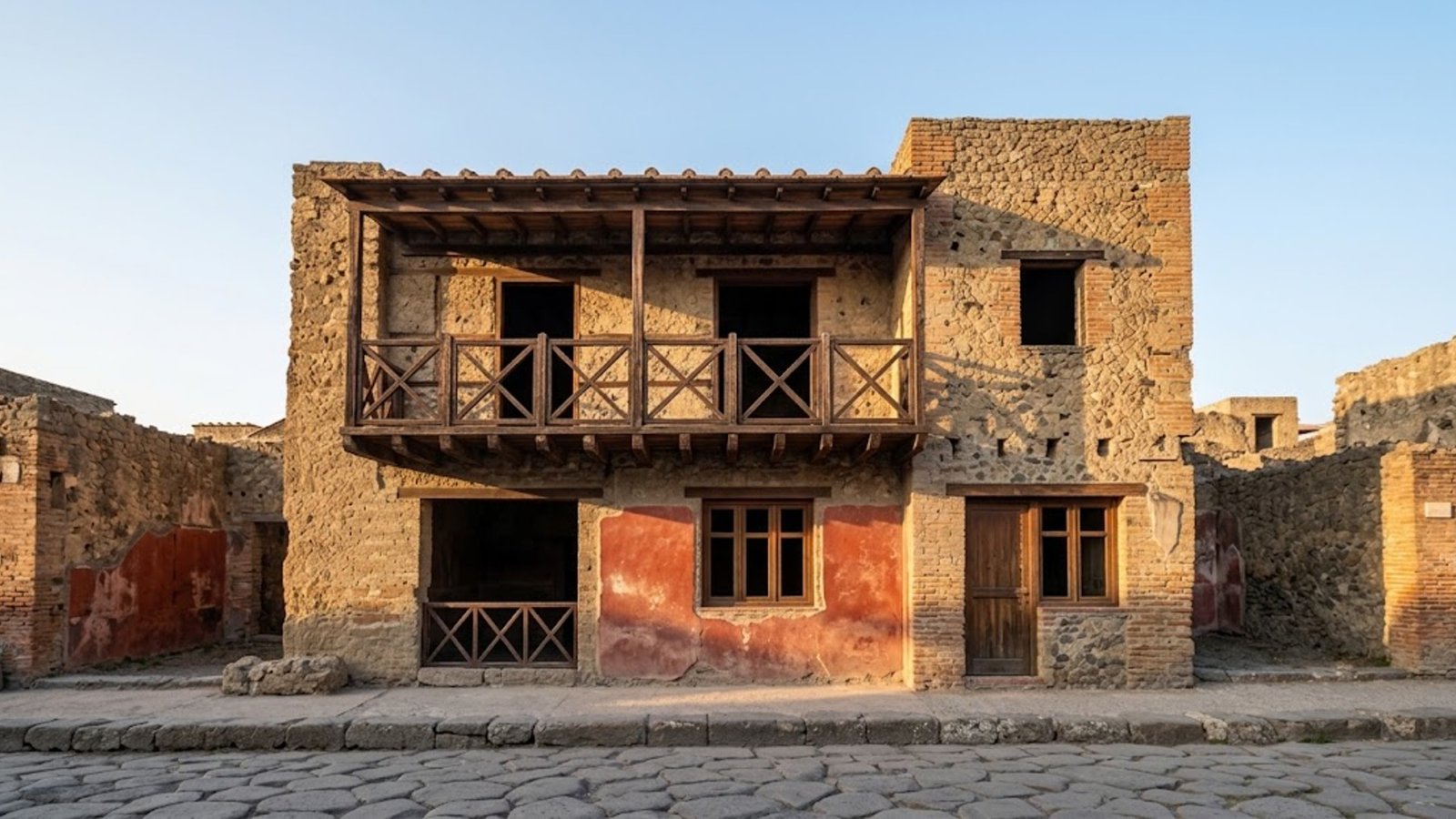
Herculaneum or Pompeii? Pompeii is the name everyone knows, and for that reason — with its cap of 20,000 visitors a day often reached — it is the site where a visit is most at risk. Twelve kilometres away, Herculaneum tells the same eruption of AD 79 in a way Pompeii cannot: the town was buried by a flow of volcanic mud that preserved wood, beams, doors, food, papyri and two storeys of houses. It is a quarter of the area, walked in two hours, and after 3 pm — when the groups have left for Naples and Sorrento — it is almost empty. This TourLeaderPro piece explains why the little sister often beats the big one, and how to build the right day.
For the free first Sunday and the Park’s rules, see our guide to free museums in Naples and Campania.
One reading from our own network on the same ground: ItalyPlanner’s Herculaneum guide. The way we work with tour operators and colleagues is set out in our network manifesto.
The practical information
| What | Detail (verified 3 Sept 2026) |
|---|---|
| Summer hours (16 March – 14 October) | 8:30 am – 7:30 pm, last entry 6 pm |
| Winter hours (15 October – 15 March) | 8:30 am – 5 pm, last entry 3:30 pm |
| Ticket | €16 full; €2 for EU citizens aged 18–25; statutory free entry |
| ErcolanoCard | €30 individual, €58 family, €5 young: 365 days from first use |
| Free | first Sunday of the month (Domenica al Museo) |
| Getting there | Circumvesuviana from Naples (Ercolano Scavi stop) and a ten-minute walk; chauffeured car in 25–30 minutes from Naples |
Herculaneum or Pompeii: why Herculaneum often wins
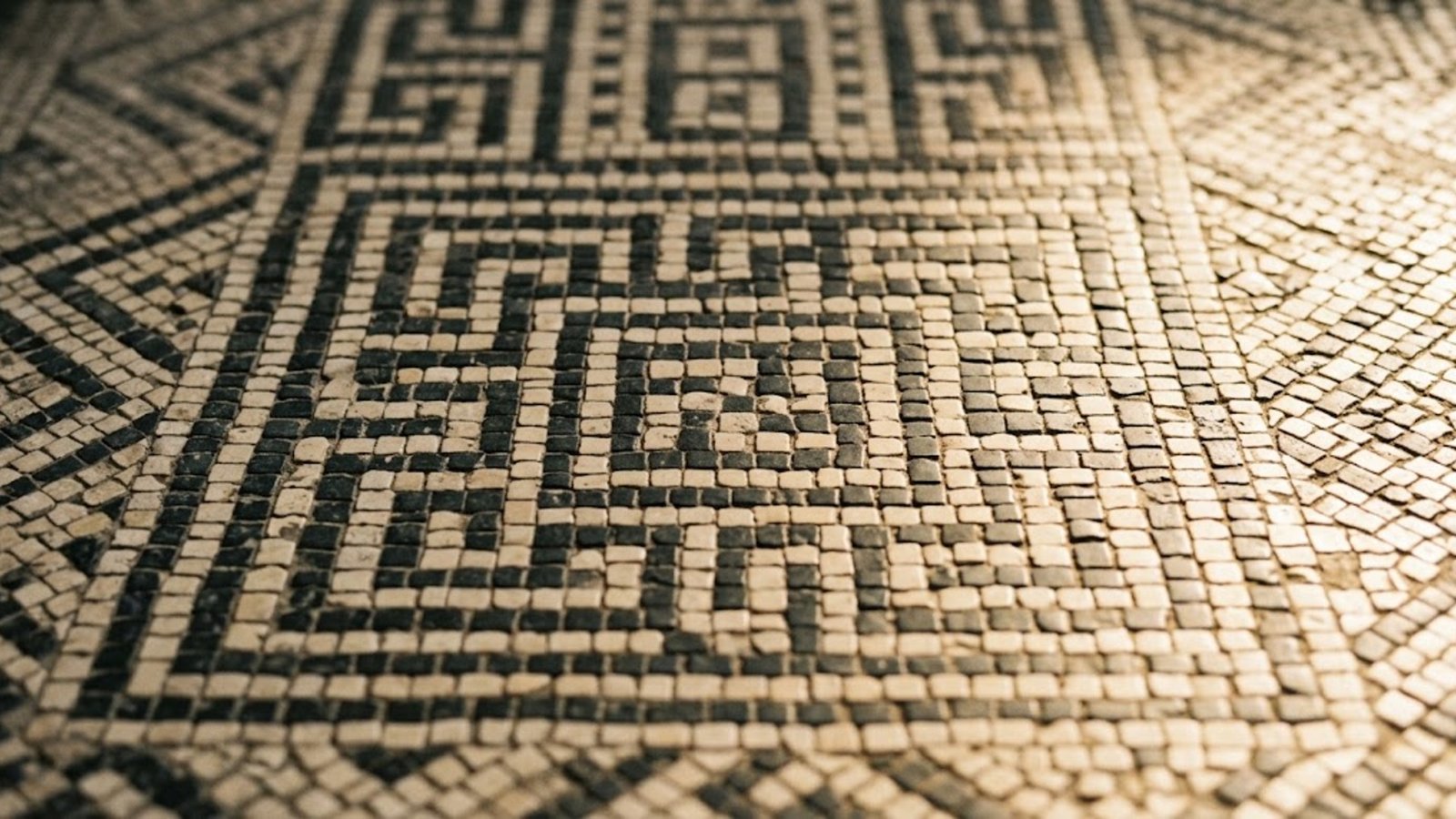
- Preservation. Volcanic mud, not ash, sealed the town: you see carbonised beams, doors, beds, shelving, the House of the Relief of Telephus, the House of the Stags with its garden over the ancient shoreline, the mosaics of the House of Neptune and Amphitrite, the Baths with their ceilings. At Pompeii one imagines; at Herculaneum one sees.
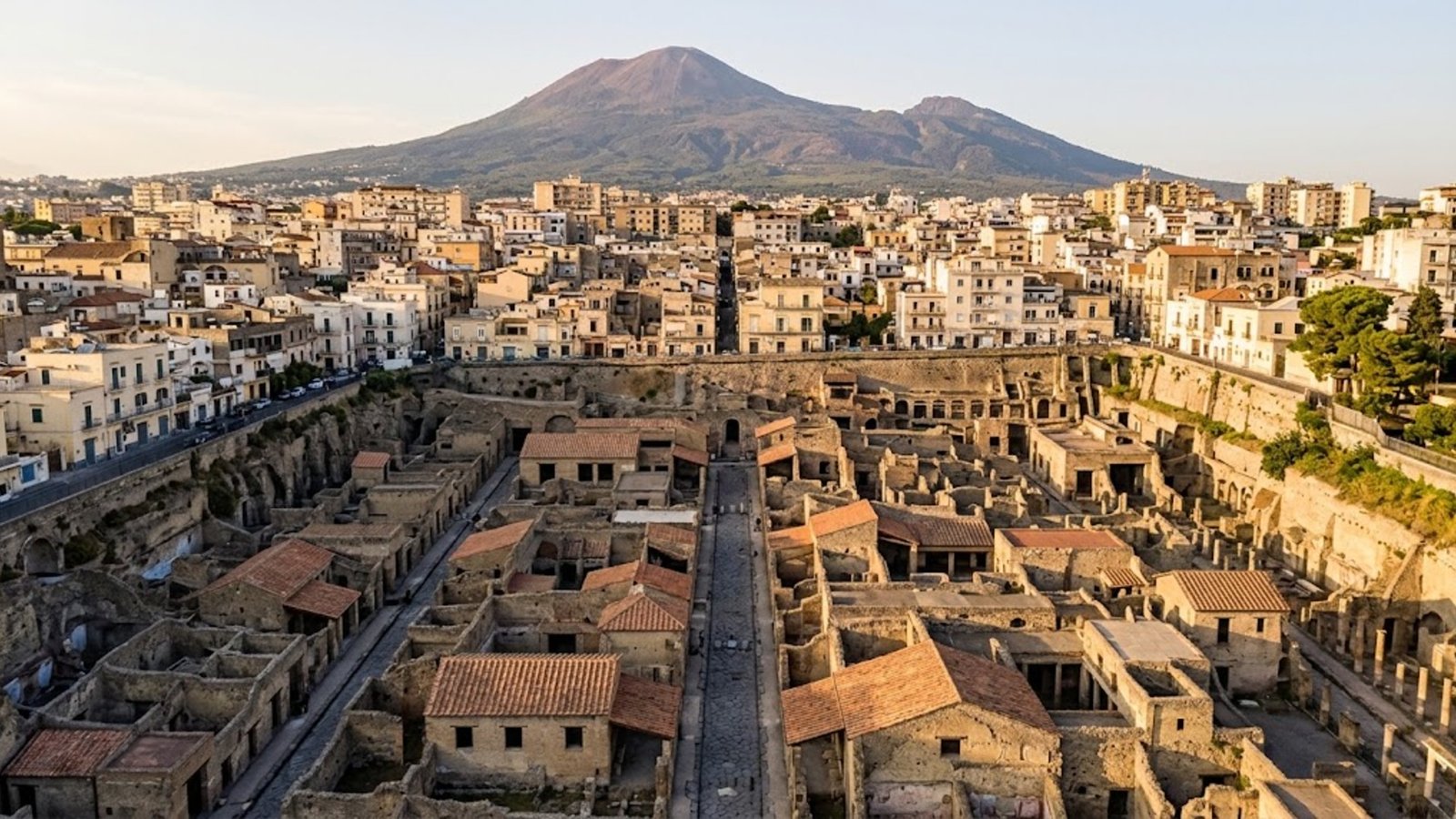
- Scale. About a quarter of Pompeii’s visible excavations: covered entirely in two hours, without the fatigue and dispersion of a 44-hectare site.
- Visitors. A fraction of Pompeii’s; and after 3 pm, when the organised excursions leave, the site empties.
- The first view. You enter from above, with the ancient town excavated below the level of the modern one and Vesuvius behind: one of the most striking views in Italian archaeology.
- The boat sheds. The skeletons of the fugitives on the ancient beach, under the arches: the moment the eruption becomes a story about people.
The afternoon, and what to do before
The day we propose reverses the usual order. Morning: the MANN in Naples with the Herculaneum rooms and the Papyri, or the Virtual Archaeological Museum (MAV) in Ercolano for those travelling with teenagers; or, for those with a boat, the coast. Lunch: in the editorial team’s tradition, a long lunch — at Nerano on the Sorrento peninsula if continuing south, or in Naples at Mergellina — and then the transfer. 3 pm: entry to Herculaneum with an archaeologist, two and a half hours in a site that empties, afternoon light on the houses and on Vesuvius; in summer last entry is at 6 pm, in winter at 3:30 pm, in which case the afternoon starts earlier. It is the opposite of the rush to Pompeii at opening, and it works.
When Pompeii remains Pompeii
Herculaneum does not replace Pompeii for those who have never seen it: the Forum, the Amphitheatre, the streets with cart ruts, the Villa of the Mysteries, the urban scale. The advisor keeps both, but treats them differently: Pompeii at opening on a weekday, with a three-hour route and access to closed domus; Herculaneum on the afternoon of another day. Never both on the same day, never on the first Sunday of the month.
For the high-end guest
Herculaneum is the ideal place for a curated visit: the site is small and the Park’s management has a tradition of special openings — the Villa of the Papyri, the areas under excavation, the underground ancient Theatre reached through the Bourbon tunnels, on dates and terms that change. The advisor asks well in advance, chooses a weekday afternoon, brings an archaeologist who has worked on the site and closes the day with dinner on the Vesuvian coast, with the volcano fading into the dark. For tour operators building a day like this: how bespoke tour design works.
Frequently asked questions
How much time is needed for Herculaneum?
Two hours for the main route, three with an archaeologist and the houses of greatest interest.
Is Herculaneum better than Pompeii?
It is better preserved, smaller and less crowded; Pompeii is larger and more complete as a city. For those with time, both; for those with little, Herculaneum surprises more.
What is the best time?
After 3 pm, when the groups leave; in winter, given the 3:30 pm last entry, from 2 pm.
Can it be combined with Pompeii on the same day?
It can, but we do not recommend it: they are two experiences each deserving its own day.
The people who make a good trip possible work in the field, not in an office: tour escorts, licensed tourist guides (the only ones allowed to explain monuments and sites), NCC chauffeurs. In the TourLeaderPro network you will find hundreds of these independent professionals: the tour operator or the traveller chooses them and contacts them directly. TourLeaderPro is not an agency and does not sell tours.
Source verified on 3 September 2026: Herculaneum Archaeological Park – Hours and tickets. Hours, prices and special openings change: always check the official website.
Daniele Dezi — I am a licensed tour escort (accompagnatore turistico) in Rome. If you need someone to accompany your group, or advice on planning the itinerary, write to me: I reply within 48 hours.