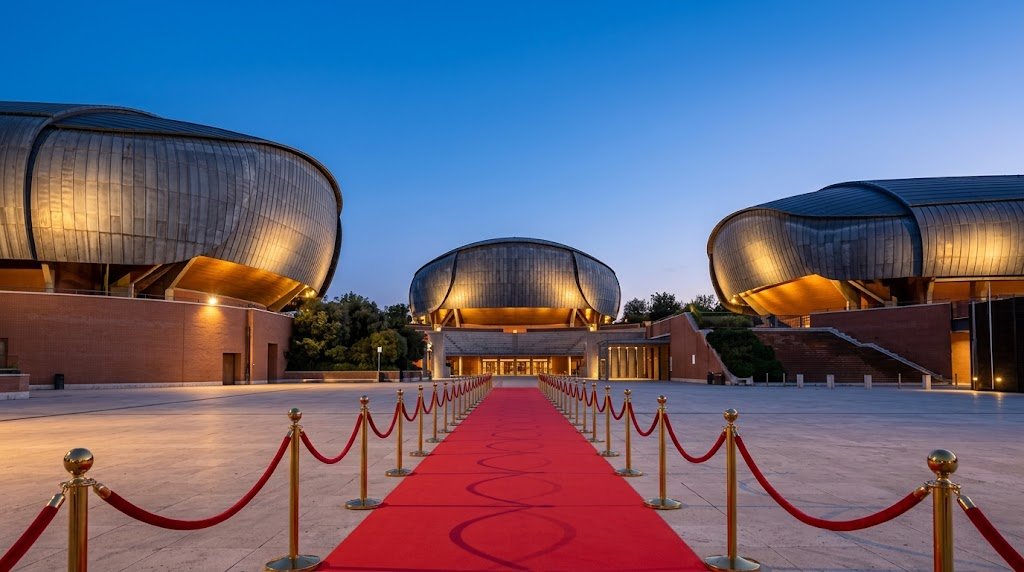
From 14 to 25 October 2026 Rome hosts the twenty-first Rome Film Fest. Its heart is the Auditorium Parco della Musica, with the main screening theatres and one of the longest red carpets in the world; the programme then extends to other venues and cultural institutions across the city. This is not Venice: the Fest was born as an event for the public, which makes it accessible in ways the Lido does not allow. This guide explains how it works, how to attend, and how to arrange the presence of a high-end guest.

For free museum days during the Fest, see our calendar of free museum days.
Two readings from our own network on the same ground: ItalyPlanner’s Rome Film Fest guide and the Auditorium page on EstateRomana. The way we work with tour operators and colleagues is set out in our network manifesto.
The essentials
| What | Detail |
|---|---|
| Dates | 14–25 October 2026, 21st edition |
| Main venue | Auditorium Parco della Musica “Ennio Morricone”, Viale Pietro de Coubertin (Flaminio district) |
| Other venues | cinemas and cultural institutions across the city, announced with the programme |
| Tickets | on advance sale about a week before the opening; date announced on official channels |
| Programme | published on the official website in the preceding weeks |
How the Fest works
The Rome Film Fest is organised by the Fondazione Cinema per Roma and differs from traditional competitive festivals in its public vocation: screenings open to anyone who buys a ticket, encounters with directors and actors, premieres and retrospectives, and a red carpet that over twelve days hosts dozens of arrivals. The Auditorium’s halls — Sala Sinopoli, Sala Petrassi, the open-air Cavea when the weather allows — have different capacities, and the headline titles sell out within hours. The red carpet is visible from the Auditorium’s piazza: watching the arrivals is free, but the best spots must be taken early.
How to attend
- As a spectator: follow the official channels for the advance-sale announcement (about a week before 14 October) and buy online as soon as it opens; for the headline titles there are no second chances.
- With a group: choose afternoon screenings or retrospectives, less contested, and plan the Flaminio logistics: the Auditorium is north of the centre, served by tram 2 from Piazzale Flaminio and by buses; a coach needs permits and an agreed drop-off point.
- Accreditation: press and industry have dedicated accreditations, with rules and deadlines published by the festival; they are not a tool for getting clients in.

For the high-end guest
This is where the Fest gives its best. The guest who wants to experience the red carpet from the inside does not buy a ticket: they enter through relationships — productions, distributors, sponsors, fashion houses, the Foundation itself — which hold invitations to gala screenings and parties. The advisor’s work begins months earlier: identifying the titles and the evenings, understanding who controls the invitations, building a discreet presence. Around the Fest revolves an economy of tailors, jewellers, central hotels and restaurants that work on reserved bookings that week. And for those who prefer cinema to society, there are private screenings in Rome’s historic theatres and visits to the Cinecittà studios, in hours and formats the public does not see.
Logistics over twelve days
- Accommodation: hotels between Flaminio, Parioli and Villa Borghese are the most convenient for the Auditorium; the historic centre remains the choice for those combining the Fest with a visit to Rome.
- Transfers: for guests, a chauffeured car with an agreed drop-off point; traffic on the Via Flaminia on gala evenings is considerable.
- Museums: the Fest falls in the second half of October, ideal weather; the free first Sunday is 4 October, before the Fest, so no overlapping crowds.
- Dress: ordinary screenings have no dress code; gala evenings do, and it should be communicated in good time.
Frequently asked questions
Can the red carpet be watched for free?
Yes, from the Auditorium’s piazza, in the areas reserved for the public. The best spots must be taken well in advance.
When do tickets go on sale?
About a week before the opening; the date is announced on the Fest’s official channels.
Is it possible to attend the gala screenings?
With a ticket, when available; by invitation through productions, sponsors and partners for reserved evenings.
What is the difference from the Venice Film Festival?
Venice is a competitive festival with a strong industry and press imprint; Rome is a fest for the public, with more accessible screenings and an urban red carpet.
The people who make a good trip possible work in the field, not in an office: tour escorts, licensed tourist guides (the only ones allowed to explain monuments and sites), NCC chauffeurs. In the TourLeaderPro network you will find hundreds of these independent professionals: the tour operator or the traveller chooses them and contacts them directly. TourLeaderPro is not an agency and does not sell tours.
Sources verified on 3 September 2026: Fondazione Cinema per Roma – Rome Film Fest 2026; Rome Film Fest – Ticket office. Programme, venues and ticketing are defined in the preceding weeks: always check the official website.
Daniele Dezi — I am a licensed tour escort (accompagnatore turistico) in Rome. If you need someone to accompany your group, or advice on planning the itinerary, write to me: I reply within 48 hours.