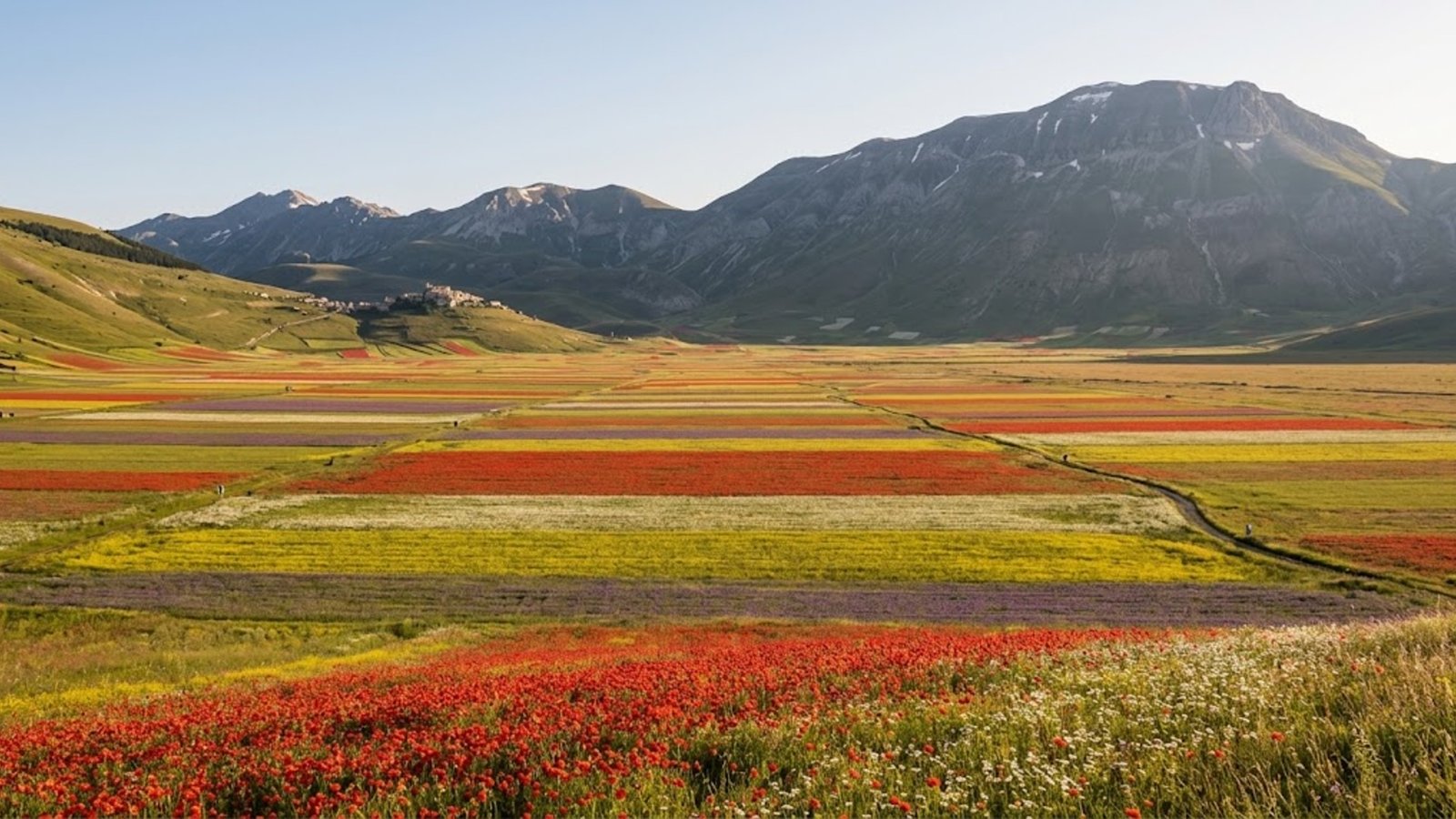
The Umbria that gets sold is the one of wine and oil, of the Montefalco wineries and the estates with pools. There is another Umbria, older and less told: that of monasteries and hermitages, of stone villages on the hills, of the Valnerina with its abbeys and of the blooms of Castelluccio di Norcia. It is the Umbria a CEO on sabbatical or a discerning guest weary of cities seeks without knowing how to name it: contemplative, silent, with a hospitality that in recent years has reached a very high level without losing its measure. This guide crosses it from Assisi to Todi, from the Valnerina to the Piano Grande, with the right timing and the places to stay.
One reading from our own network on the same ground: ItalyPlanner’s Assisi guide. The way we work with tour operators and colleagues is set out in our network manifesto.
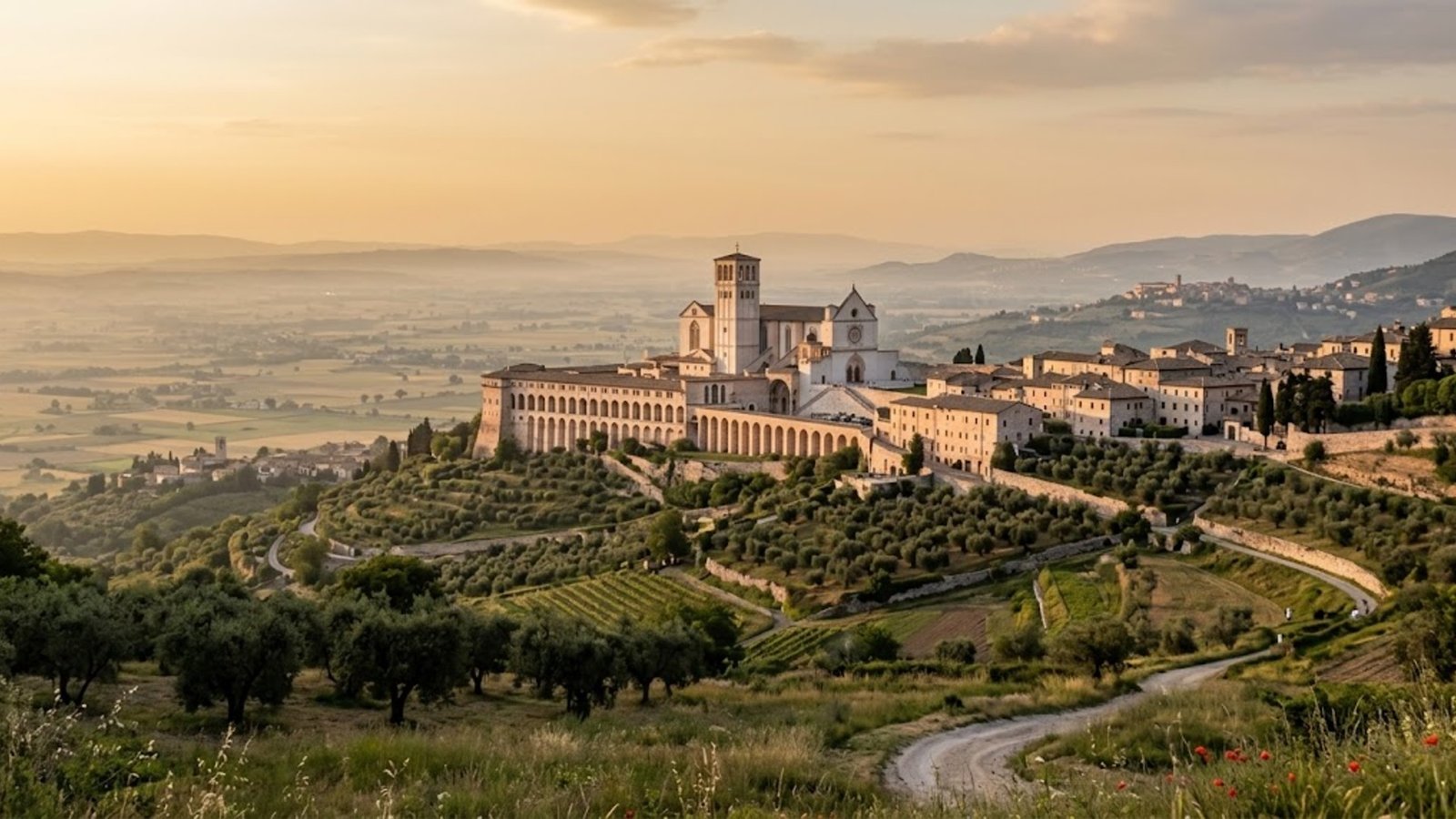
Assisi, beyond the basilica
The Basilica of St Francis, with Giotto and Cimabue, is one of the strongest artistic and spiritual experiences in Europe and must be seen — early, on weekdays, with someone who can read the frescoes. But contemplative Assisi lies outside the walls: the Eremo delle Carceri on Mount Subasio, where Francis withdrew, reached on foot in an hour’s climb among the holm oaks; San Damiano, where Clare lived and Francis composed the Canticle; the Porziuncola inside Santa Maria degli Angeli. The Franciscans keep a tradition of welcome for those seeking silence, with guesthouses and retreats arranged with respect and in advance, not with an online booking. To sleep with a view of the basilica, the Nun Assisi, in the former convent of the Poor Clares with Roman baths below ground, is the reference; the surrounding hills have restored villas and convents.
Todi and the Tiber hills
An hour away, Todi is the town American architects in the 1990s named “the most liveable in the world”, and it remains a stone village on a hill with an intact medieval square, the Temple of the Consolazione attributed to Bramante’s school and a view over the Tiber valley that invites doing nothing. Around it, the hills towards Orvieto and Perugia hold houses and estates where silence is the main offer; and, in the upper Tiber valley on the Tuscan border, the Castello di Reschio, the Bolza family’s estate turned into one of the most sought-after places of hospitality in Italy, with restored farmhouses, horses and the castle-hotel. It is the base for those who want contemplative Umbria with absolute comfort.
The Valnerina: abbeys, water, silence
The valley of the Nera, between Spoleto and Norcia, is Umbria’s most secret: the Marmore Falls at its mouth, the abbey of San Pietro in Valle with its Romanesque frescoes, the villages of Scheggino and Vallo di Nera, the paths along the river. It is also the valley wounded by the 2016 earthquake, with Norcia and the Basilica of St Benedict under reconstruction: visiting it with those who live there is an act of attention, not curiosity. The Valnerina’s trattorias — black truffle, trout, cured pork — are among the best in central Italy, and do not know it.
Castelluccio: the bloom and the rest of the year
| Period | What | Note |
|---|---|---|
| late May – mid-July | the bloom of the Piano Grande: lentils, poppies, cornflowers, mustard in stripes of colour that change every week; the peak usually between mid-June and early July | dates vary with the season; on peak weekends the municipality regulates access: go on weekdays, at dawn |
| August – September | the lentil harvest, the pastures, walks on Mount Vettore | the best light for the landscape |
| October – November | autumn colours, mist on the Piano, no one | the most contemplative moment |
| winter | snow, snowshoes, absolute silence | roads to check; Castelluccio is at 1,450 metres |
Castelluccio, the village, was largely destroyed by the earthquake and is living a slow reconstruction; the Piano Grande, the great karst plateau at the foot of Mount Vettore, is intact and remains one of the most extraordinary landscapes in Italy. It is reached from Norcia by the Forca Canapine road or from Arquata del Tronto; in bloom, with a photographer or a naturalist, it is the day guests remember.
The reference programme: five days
- Days 1–2, Assisi: the Basilica at opening with a historian, the Eremo on foot, San Damiano at sunset; an evening with the Franciscans, if the guest wishes.
- Day 3, Todi and the hills: the town in the morning, a long lunch, a free afternoon at an estate; night at Reschio or in a villa.
- Day 4, Valnerina: San Pietro in Valle, Scheggino, the Falls, dinner in the Valnerina; night in Norcia or Spoleto.
- Day 5, Castelluccio: at dawn on the Piano Grande, a walk with a naturalist, return via Spoleto.
For the high-end guest
Contemplative Umbria is not sold with adjectives: it is sold with time. A guest arriving from three cities in seven days needs an estate where nothing is done, an abbey visited alone with the custodian, a bloom seen at dawn without photographers, a lunch that lasts three hours. The advisor builds the days around two or three moments and leaves the rest empty; and knows that the Franciscans, the monks and the farmers of the Valnerina receive those who come with respect and with a name, not those who come with a coach.
Frequently asked questions
When does Castelluccio bloom?
Between late May and mid-July, with the peak usually between mid-June and early July; dates change every year with the season.
Can one sleep in a monastery?
Some communities have guesthouses for those seeking silence, with their own rules; it is arranged in advance and with respect, not with an online booking.
Can Norcia and the Valnerina be visited after the earthquake?
Yes; reconstruction is under way and some monuments remain closed or under works. Visiting them with those who live there is the right choice.
What is the best base?
Assisi or its hills for the spiritual part; an estate between Todi and the upper Tiber valley for comfort; Spoleto or Norcia for the Valnerina and Castelluccio.
Piece based on the editorial team’s direct experience. Bloom and access at Castelluccio: Municipality of Norcia and Sibillini Mountains National Park; Basilica of St Francis: Sacro Convento of Assisi. Hotels and estates mentioned as the editorial team’s indications.
TourLeaderPro Network — contact us for contemplative Umbria.