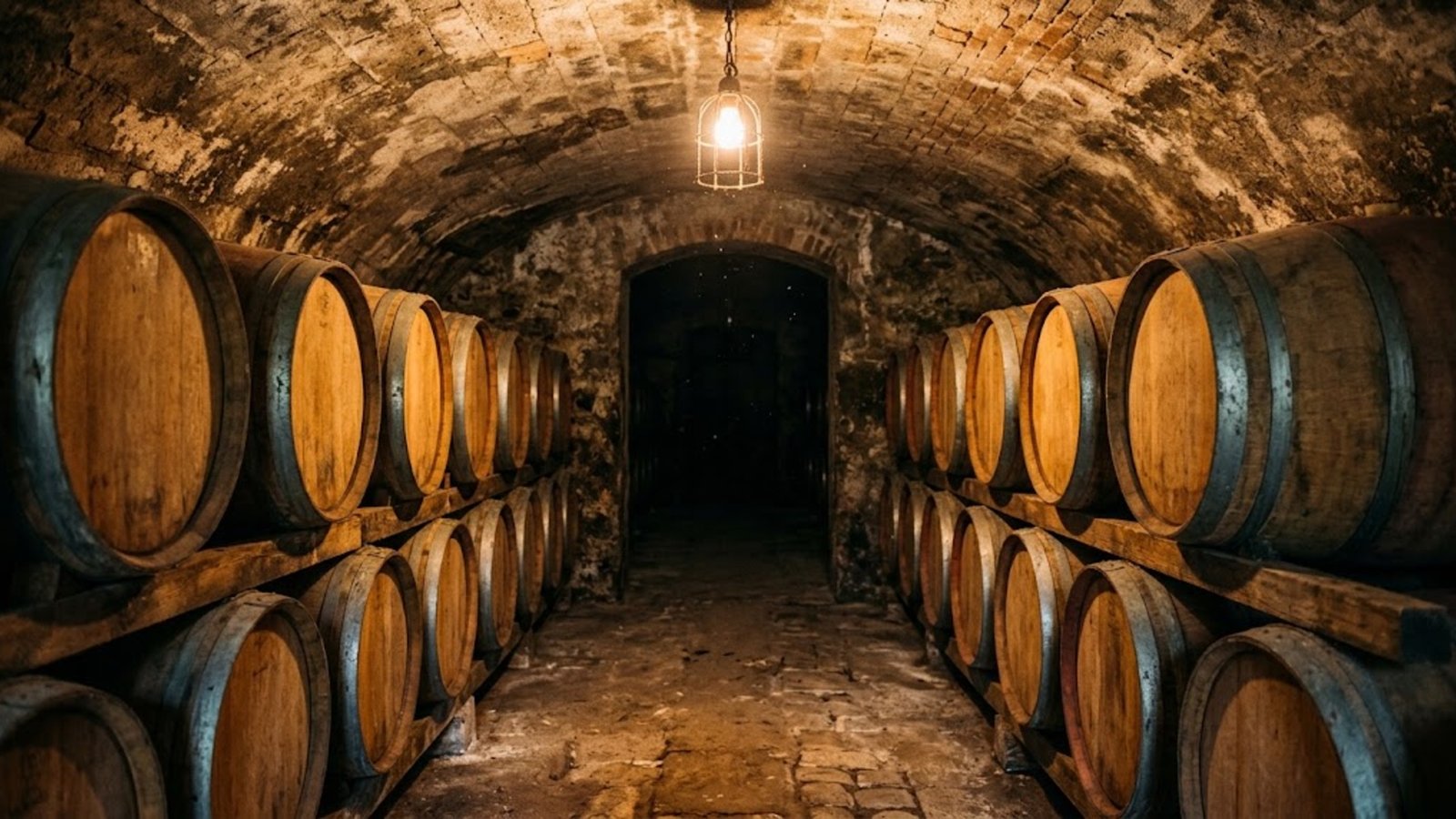
Chianti Classico — the Black Rooster, the hills between Florence and Siena — is a large appellation, with hundreds of producers and a few groups bottling millions of bottles. Within this scale, however, lives another reality: families growing Sangiovese on a few dozen hectares, who know every row by name and who receive, when they receive, at home. They are the producers collectors and advisors look for, and they are not visited through an online form. This piece tells who they are, what sets them apart, how one reaches their table — and explains what has changed in recent years.
One reading from our own network on the same ground: ItalyPlanner’s Chianti Classico guide. The way we work with tour operators and colleagues is set out in our network manifesto.
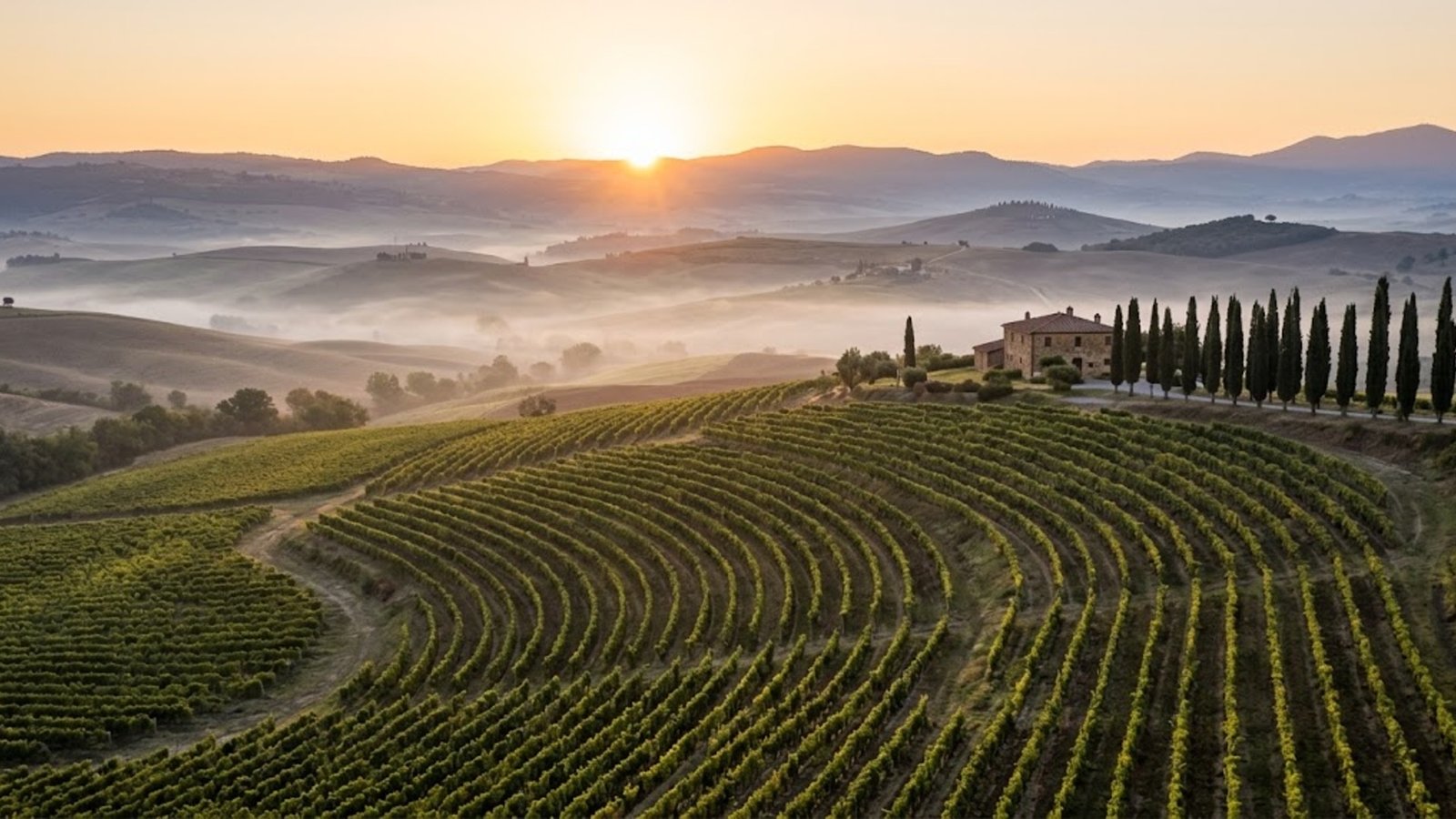
What “the old way” means
It does not mean outdated technique: the cellars we are talking about are among the most careful in Italy. It means three things. Sangiovese, pure or nearly so, without the shortcut of international varieties that made the fortune of the “Supertuscans” in the 1990s; viticulture without chemicals, organic or biodynamic, with the vineyard treated as an ecosystem rather than a plant; family ownership and management, with the generation that decides and the one that learns in the same room. The result is a wine that tastes of place, and a welcome that cannot be bought.
The families
| Estate | Where | The family | Why they matter |
|---|---|---|---|
| Fontodi | Panzano in Chianti, the Conca d’Oro | Manetti, since 1968 | organic Sangiovese, Flaccianello della Pieve as a manifesto; an estate that also includes Chianina cattle and olive oil. Giovanni Manetti today also leads the Chianti Classico Consortium |
| Castello di Volpaia | Radda in Chianti | Mascheroni Stianti | an entire medieval village turned into a diffused winery, with vats in the houses and deconsecrated churches; organic; the family lives in the castle |
| Montevertine | Radda in Chianti | Manetti (another branch), since 1967 | outside the appellation by choice, with Le Pergole Torte among the most sought-after Sangioveses in the world; tiny production, very rare visits |
| Badia a Coltibuono | Gaiole in Chianti | Stucchi Prinetti | a thousand-year-old abbey with the cellar in the crypts; organic for decades; the family has made cooking and hospitality a school |
| Castello di Ama | Gaiole in Chianti | Pallanti | high-altitude vineyards and a park of contemporary art commissioned from major international names; Chianti Classico seen as a place of culture |
A necessary note: Isole e Olena, for decades synonymous with Paolo De Marchi and one of the most admired Chianti Classicos, passed in 2022 to a French group and De Marchi left the estate; the winery remains of high quality, but it is no longer the family case it was. The ownership picture changes every year: check before telling a client.
The UGAs and the new geography
Since 2021 the Consortium has introduced the Additional Geographical Units (UGA): eleven territorial names — Panzano, Radda, Gaiole, Castellina, Greve, Lamole, Montefioralle, San Casciano, San Donato in Poggio, Vagliagli, Castelnuovo Berardenga — that may appear on the label for the Gran Selezione category. For the visitor it is a map: Panzano and Radda for the tautest Sangiovese, Gaiole and Castelnuovo for the broader wines, Lamole for altitude. The advisor builds the tour around two or three UGAs, not around a list of wineries.
How one reaches the table
- By introduction. The families receive those who come with a name they know: an importer, a restaurateur, an advisor they have worked with for years. The website request is for standard visits, where they exist.
- In advance and outside harvest. From mid-September to mid-October the families are in the vineyard and the cellar: one visits, but does not lunch. The best months are May–June and October–November after harvest.
- Small numbers. Four people, six at most; a coach does not even fit in the lane.
- With something to say. The host wants to understand who is in front of them: a collector who knows the vintages, a curious family, a restaurateur. The discerning guest who listens is invited back.
For the high-end guest
The reference day: base in a villa between Panzano and Radda; in the morning a family winery with the person who decides, in the vineyard and then in the barrel cellar, with old vintages opened at the table; lunch at home or at the village trattoria where the family eats; in the afternoon a village — Volpaia, Lamole, Montefioralle — and a second, smaller winery; in the evening a dinner with a sommelier explaining the UGAs with the glasses in front. The advisor takes the guest to those who will receive them as a friend, and makes sure they become one.
Frequently asked questions
Can these wineries be visited without an introduction?
Some offer visits and tastings by booking; meeting the family and lunches at home usually pass through an introduction.
What is the best period?
May–June and October–November; harvest (September–October) is fascinating to see but not the time to visit at home.
What are the UGAs?
The eleven Additional Geographical Units of Chianti Classico, since 2021, identifying the territory on the label for the Gran Selezione.
Is Isole e Olena still De Marchi’s?
No: the estate was sold in 2022 to a French group and Paolo De Marchi left it.
Piece based on the editorial team’s direct experience; ownership and availability for visits change and must be checked. Institutional source: Chianti Classico Wine Consortium. The estates mentioned are the editorial team’s indications, not advertising.
TourLeaderPro Network — contact us for Chianti Classico with the families who make it.