This cash report sheet guide for tour leaders covers tour cash management: how to fill it out, mistakes to avoid, downloadable template. From the Cold Mind Method: the protocol that protects you and the tour operator.
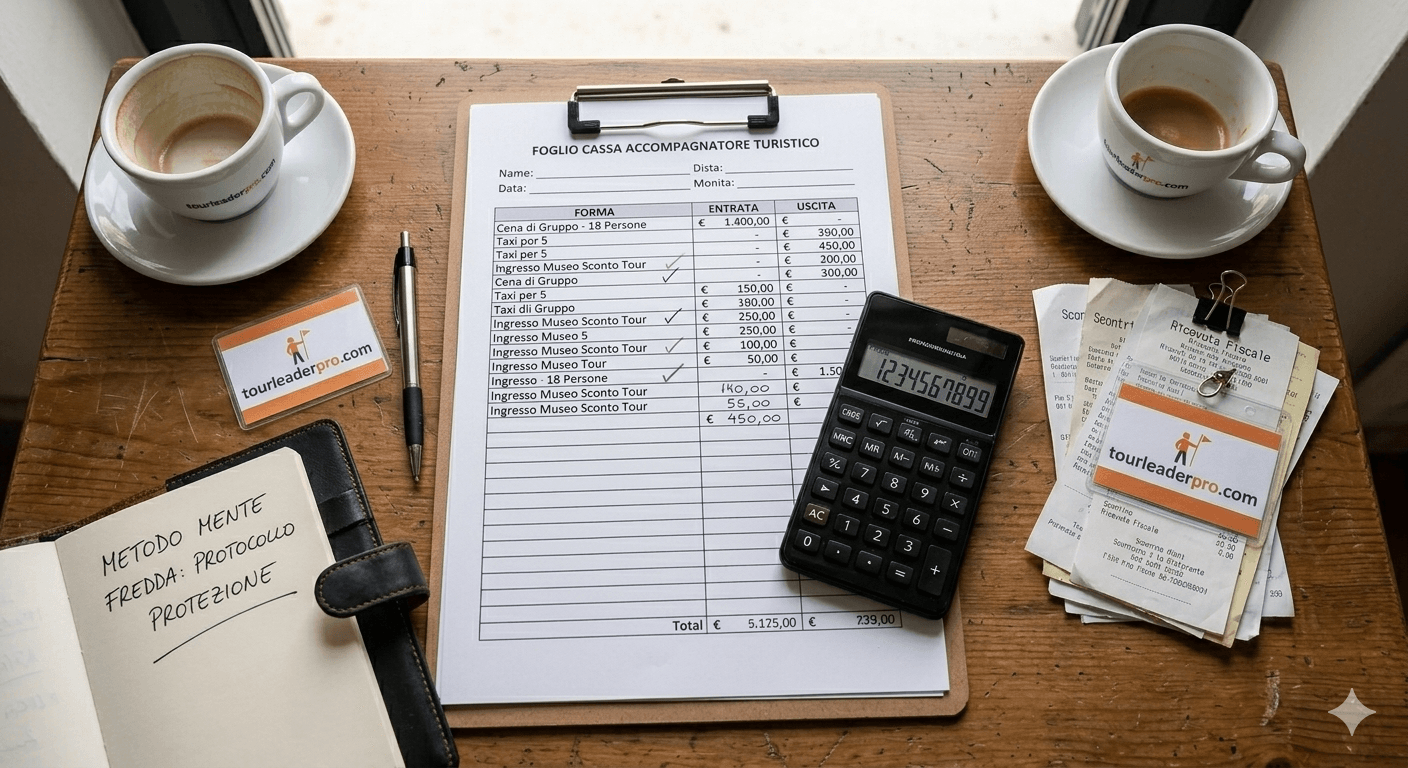
The Cash Report Sheet: The Tool That Protects You, the Tour Operator, and Your Reputation
Tour Leader Cash Report Sheet: The Topic That Can Ruin Your Career

In tour leader training courses, they cover geography, regulations, and foreign languages. But almost nobody devotes time to one of the most sensitive and daily aspects of the job: managing money. Yet, as a tour leader, you’ll be handling significant sums every day: the cash fund entrusted by the tour operator to cover tour expenses (entrance fees, tips, non-included meals, contingencies, extras).
A mistake on the cash report sheet isn’t like a mistake in telling the story of the Colosseum. A mistake on the cash report sheet is a shortfall. And a shortfall, if not properly documented, becomes a suspicion. And a suspicion, in a professional relationship built on trust, can destroy a collaboration in an instant.
The Cold Mind Method devotes an entire section to cash fund management, because it’s one of those areas where the difference between a structured professional and a winger is most visible — and most costly.
What the Tour Cash Fund Is and How It Works
The cash fund is a sum of cash that the tour operator entrusts to the tour leader before the tour to cover planned operational expenses and contingencies. The amount varies based on tour duration, number of participants, destination, and service level. It can range from a few hundred euros for a day tour to several thousand for a high-end multi-day tour.
The tour leader is responsible for that money from the moment they receive it until they return the completed cash report sheet with attached receipts. This responsibility is serious: it’s not your money, you must account for every cent, and transparency is the pillar on which the trust relationship with the tour operator rests.
How to Fill Out the Cash Report Sheet: The Cold Mind Protocol

Rule 1: Update Every Evening, Never “Tomorrow”
The most important rule of all. Every evening, before going to bed, fill out the cash report sheet for the day. Not “tomorrow morning,” not “when I have time,” not “at the end of the tour.” Every evening. Why? Because memory is unreliable. After 3 days of intensive touring, you won’t remember whether that €45 receipt was Tuesday’s lunch or the doorman’s tip on Wednesday. And a receipt without an explanation is a problem.
Rule 2: Every Expense Needs a Receipt
No exceptions. Every time you pay for something with the cash fund, ask for a receipt (tax receipt or otherwise). If it’s not possible to get a receipt (tip, parking meter, small informal expense), immediately write a note on the cash report sheet with date, amount, reason, and if possible the beneficiary’s name. The Cold Mind Method includes a “No-Receipt Expense” form for these situations.
Rule 3: Separate the Categories
The cash report sheet isn’t a generic list of expenses. Organize it by categories: transportation (taxis, parking, tolls), dining (lunches, dinners, coffee breaks), admissions (museums, attractions, guides), tips and gratuities, contingencies (pharmacy, service replacements, group-requested extras), and miscellaneous. This categorization helps you maintain control and the tour operator verify expense accuracy.
Rule 4: Record the Daily Balance

Every evening, after entering all the day’s expenses, calculate the remaining balance. Initial fund minus total expenses equals available balance. This balance must match exactly the cash you have on hand. If there’s a difference, find it immediately. Don’t wait until the tour ends: a €20 discrepancy found the same day is an understandable error. The same discrepancy found a week later is a credibility problem.
Rule 5: Photograph the Receipts
Paper receipts fade, get lost, get wet. Every evening, photograph all the day’s receipts and save them in a dedicated folder on your phone (organized by day). It’s your backup in case of loss. Some tour operators now accept digital format directly.
The Mistakes That Make You Lose the Tour Operator’s Trust
Filling out the cash report sheet at the end of the tour: a guarantee of errors, forgotten items, and missing receipts. Never.
Not asking for receipts “because it’s only 5 euros”: five expenses of €5 without receipts are €25 undocumented. Over a 7-day tour, those add up to significant amounts.
Mixing personal expenses with tour expenses: fatal mistake. The cash fund is exclusively for tour expenses. Your personal expenses (coffee, phone, off-duty meals) are separate. Always.
Not communicating extras: if the group requests an unplanned service (an extra tour, dinner at a different restaurant, an additional taxi), notify the tour operator immediately before paying. Don’t decide on your own how to spend the tour operator’s money.
Returning the cash report sheet late: the tour operator needs the statement for their accounting. The Cold Mind protocol requires submission of the completed cash report sheet within 48 hours of the tour’s end.
The Cold Mind Method Template
The Tour Leader Guide 2026 includes a professional, field-tested cash report sheet template, with all expense categories pre-set, automatic balance calculation, and space for daily notes. In the Members Area you’ll find the downloadable and editable digital version, ready to be customized with the logo of the tour operator you work for.
It’s not just a sheet: it’s the system that protects you. When the tour operator sees a flawlessly completed cash report sheet, with every expense documented and categorized, they know they’re working with a professional. And professionals get called back.
[Internal link] Download the cash report sheet template with the Tour Leader Guide 2026 → /en/tour-leader-guide-2026/
[Internal link] The complete pre-departure checklist → /en/pre-departure-checklist-tour-leader/
[Internal link] Are you a TO? Train your staff with the Cold Mind Method → /en/tour-leader-guide-2026/formazione-staff-tour-operator/
Practical Tools for Your Career
All operational tools — checklists, templates, flowcharts, and case studies — are available in the Tour Leader Guide 2026. If you’re already licensed, join the TourLeaderPro Network for job opportunities from verified Tour Operators. Also explore the professional development path.
Cash Management: Mistakes to Avoid and Best Practices
Tour cash management is one of the most sensitive responsibilities of the tour leader. The most common mistakes include: mixing personal money with the tour cash fund, not requesting receipts for every expense, not recording disbursements immediately, and not updating the cash report daily. A Tour Leader who manages the cash rigorously demonstrates professionalism and builds trust with the tour operator. To explore the overall financial management of your career, read the article on tax regime for tour leaders.
The final cash statement is a professional document that the Tour Leader delivers to the tour operator at the end of the tour. It must include: initial balance received, detail of every disbursement with date and attached receipt, final balance returned or reimbursement requested. A well-managed cash fund is often the decisive factor in getting new assignments from the same operator. The Tour Leader Manual includes ready-to-use cash report sheet templates and standardized procedures. For simplified accounting tools for freelancers, check the Agenzia delle Entrate – Flat-Rate Regime portal. Also visit the section on professional liability and insurance for comprehensive management of your business.