Bus Breakdown on the Highway: How the High-Profile Tour Leader Turns a Disaster into a Memorable Moment
A bus breakdown on the highway: every tour leader fears it, but few know how to turn this emergency into an opportunity. 28 Australians. 34°C. The bus stops on the A3 between Salerno and Positano. Engine failure. The replacement will arrive in 90 minutes. At this moment you have two choices: sit on the guardrail and complain along with the group, or apply the Cold Mind Method and turn 90 minutes of panic into a moment your clients will talk about for years. This is a true story. And it’s the difference between an average Tour Leader and a High-Profile one.
Case Study from Ch. 8 of the Tour Leader Guide 2026 — one of 40+ operational scenarios analyzed with the Cold Mind Method. tourleaderpro.com/en/tour-leader-guide-2026/ |
The Scenario: All the Details
| CASE DATA |
Tour: Rome — Naples — Amalfi Coast (7 days) Day: 3 of 7 Group: 28 Australians, average age 55-65 Problem: bus engine failure on the A3, Salerno-Positano stretch Outside temperature: 34°C Replacement bus: estimated 90 minutes Day program: visit Positano + lunch on the coast + stop in Ravello + return to Sorrento hotel Fixed schedule: hotel dinner booked at 8:00 PM, driver approaching driving time limits |
The Cold Mind Method Protocol: Minute by Minute
Phase 1 — Immediate Reframing (0-5 minutes)
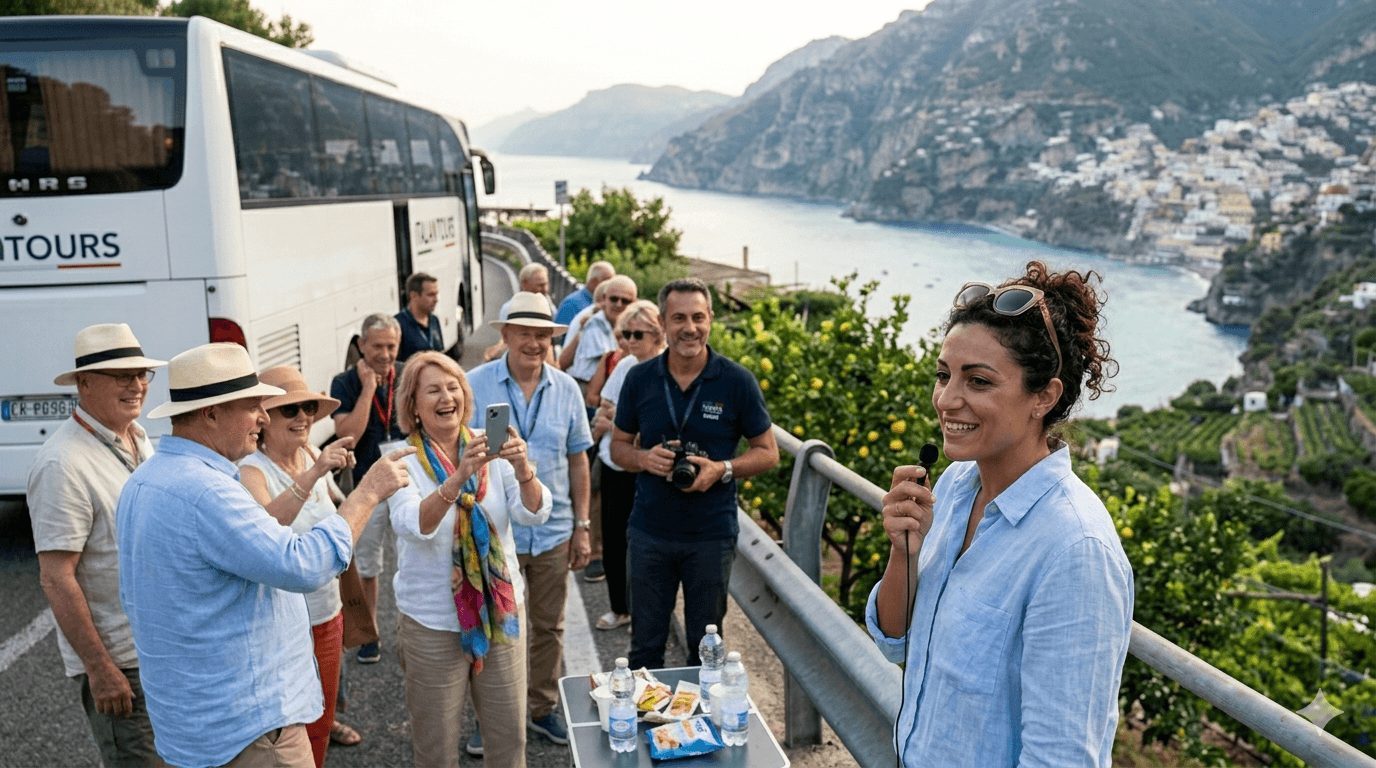
The Tour Leader picks up the microphone in a relaxed tone: “Ladies and gentlemen, our bus has decided to take a break at the most scenic point of the Coast. We’re arranging a replacement vehicle. In the meantime, let’s take advantage: this is a view you normally don’t get from here. Who wants a photo?”
What’s happening in the Tour Leader’s head: already working out Plan B. They could drop the Ravello stop (45 min) and replace it with a 10-minute panoramic photo stop, recovering the delay. But they do not announce Plan B to the group: they communicate calm.
Phase 2 — Invisible Operations (5-15 minutes)
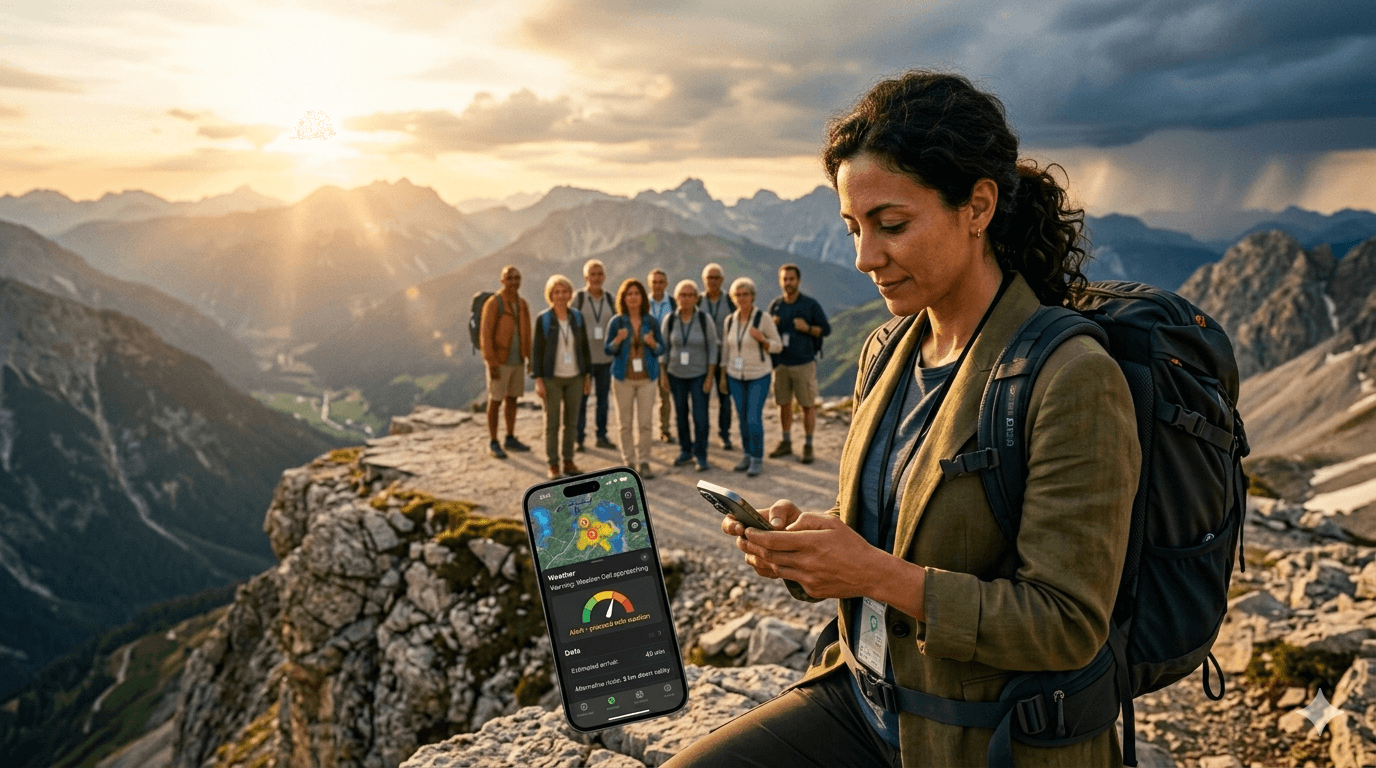
Calls the TO + the bus company (numbers in the trip dossier, not on Google). Confirms the exact replacement arrival time. Gets a realistic estimate, not an optimistic one.
Manages safety: distributes backup water (Ch. 8 checklist: ALWAYS have extra water on the bus). If possible, turns on the air conditioning with the engine off. Otherwise, evacuates passengers to a shaded area along the guardrail safely.
Driving-time rule: checks with the driver how much margin remains under Reg. 561/2006. If the delay compromises legal driving hours, they communicate it to the TO immediately — not at the end of the day when it’s too late.
Any change to the programme should be agreed with the tour operator, not decided alone. Under the EU Package Travel Directive (2015/2302), when a significant part of the travel services cannot be provided as agreed, the organiser must offer suitable alternative arrangements at no extra cost to the traveller.
Phase 3 — Strategic Entertainment (15-60 minutes)
This is where the High-Profile professional shines. The 90 minutes of waiting aren’t dead time — they’re an opportunity.
Stories of the Amalfi Coast: the history of Amalfi lemons, Saracen towers, the Path of the Gods. Content they would have delivered during the transfer anyway — they deliver it now, with a panoramic view.
Quiz a premi: questions about Italy with TO branded merchandise as prizes (magnets, keychains). Creates engagement and lightens the mood.
Caffè: offers coffee to anyone who wants it from the nearest highway vending machine. A €2 per person gesture worth thousands in goodwill.
Phase 4 — Departure (60-90 minutes)
Bus sostitutivo arriva. Orderly transfer management: passengers with reduced mobility first, then the rest. Headcount. Departure.
Plan B is already active: Ravello stop eliminated (45 min), replaced with a 10-minute panoramic photo stop along the road. The group doesn’t perceive any loss because the view is spectacular and the Tour Leader presents it as an “exclusive stop not included in the program.”
The Impact on the Tour Operator
| COLD MIND METHOD RESULT |
Zero lamentele dal gruppo. Nessuna richiesta di rimborso. Nessun danno d’immagine sui social. The TO recognizes a Tour Leader capable of saving the product and protecting revenue even in the most critical situations. The group will rate the tour 5 stars — including the day of the breakdown. |
The Reactive Approach: What Happens If You DON’T Apply the Protocol
| IF YOU DO THIS, THE TO WILL DISTANCE THEMSELVES |
You sit on the guardrail and complain: “This is unbelievable, this bus always has problems, the company is terrible.” You leave 28 passengers under the sun without water while frantically calling the TO repeating: “I don’t know what to do.” The group starts protesting on social media, tagging the Tour Operator. When the replacement bus arrives, the image damage is already done. The TO will challenge you: failure to manage the emergency, no Plan B, no documentation. |
The 5 Operational Lessons from This Case

Lesson 1: ALWAYS Have Extra Water on the Bus
The Ch. 8 checklist of the Tour Leader Guide 2026 says it clearly: minimum supply of 2 water bottles per passenger. Costs €30, can save the day.
Lesson 2: Plan B Must Be Prepared BEFORE You Need It
The High-Profile Tour Leader, the evening before, has already looked at the map and identified expendable stops. They know Ravello is the only flexible stop of the day. When the bus stops, Plan B is already ready.
Lesson 3: Reframing Changes Perception
“The bus broke down” generates panic. “The bus decided to take a break at the most scenic point” generates curiosity. The words you choose in the first 30 seconds determine the group’s mood for the next 2 hours.
Lesson 4: Every Minute of Waiting Must Be Filled
Emptiness generates anxiety. Content generates gratitude. Tell stories, play games, offer coffee. The 90 minutes must feel like 30.
Lesson 5: Document, Always
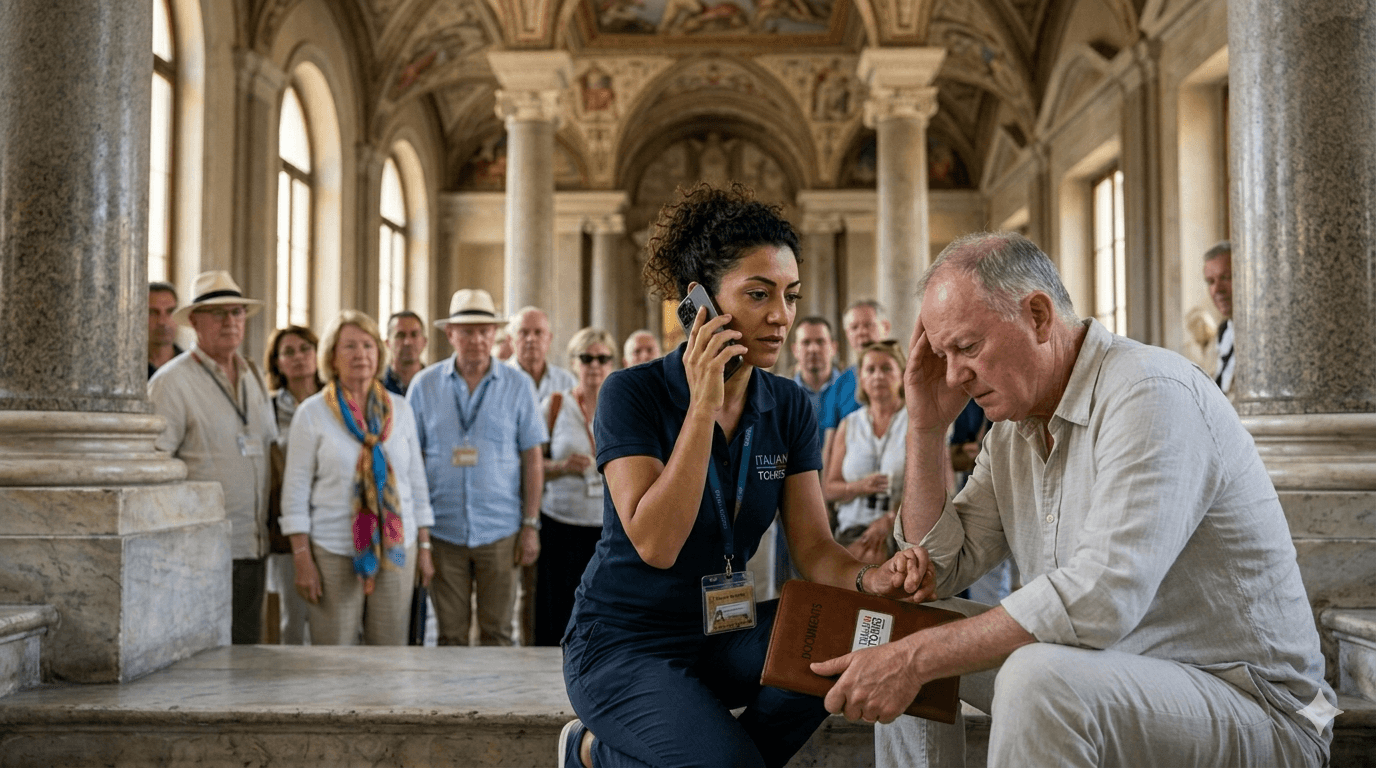
Photos of the broken bus, time of communication to the TO, replacement confirmation, departure time. This documentation is your professional survival insurance.
The Tour Leader’s Emergency Supply: What to Always Have on the Bus
| ITEM | MINIMUM QUANTITY | WHY |
| Water | 2 bottles × passenger | 34°C + waiting = dehydration |
| Snack | Crackers/cookies for everyone | Lunch will be skipped if there’s a delay |
| First aid kit | 1 complete | Always, regardless of the route |
| Portable USB charger | 2-3 power banks | Dead phones = modern panic |
| TO Merchandise | 10-15 pieces | Quiz prizes, courtesy gestures |
| Umbrellas/ponchos | 5-10 | Sudden rain, sun shades |
Plan B is a central theme of the Cold Mind Method:Plan B: why every day must have one → tourleaderpro.com/en/plan-b-tour-contingency-management/ |
FAQ — Bus Breakdown Management and Transport Contingencies
Is it my fault if the bus breaks down?
No, the technical responsibility lies with the transport company. Your responsibility is emergency management: group safety, communication, Plan B, documentation.
Can I request a refund from the bus company?
Not directly — the contract is between the TO and the company. Your role is to document everything (photos, times, communications) and provide the TO with evidence to negotiate compensation or a contractual penalty.
What if the driver wants to continue despite expired driving hours?

The answer is NO. Reg. 561/2006 is clear and you share liability if you endorse the violation. Key phrase: “I cannot authorize continuing. I suggest a stop and recovery.”
Should I inform the group about the technical cause of the breakdown?
Give reassuring and practical information, not technical. The group doesn’t need to know the timing belt broke — they need to know the replacement arrives in 60 minutes and that in the meantime they can enjoy the view.
How do I handle a protesting passenger?
Active listening + concrete action. “I understand the frustration, ma’am. I can confirm the replacement vehicle arrives at [time]. In the meantime, may I offer you a coffee?” Empathy + solution, never justification.
How many Plan Bs should I have for each day?
At least one for every expendable stop. The evening before the tour, identify the “sacrificable” stops (photo stops, short breaks) you can eliminate to recover time. The Cold Mind Method calls them “buffer stops.”
TOUR LEADER GUIDE 2026 — 40+ real case studies analyzed with the Cold Mind Method. From flight cancellations to restaurant allergies, from bus breakdowns to deaths during the tour.tourleaderpro.com/en/tour-leader-guide-2026/tourleaderpro.com/en/contact/ |
Bus Breakdown: The Communication Protocol with the Transport Company
When the bus stops, the first call must be to the transport company. The tour leader communicates precisely: GPS position or highway kilometer, number of passengers, nature of the bus problem (if known), and requests a replacement bus within specific timeframes. Documenting the communication with times and names of contacts is essential for potential refunds.
The second contact is with the organizing agency: communicate the bus breakdown contingency, update the day’s program, and agree on any tour modifications. Keeping passengers informed with updates every 15-20 minutes reduces anxiety and prevents panic.
How to Keep the Group Positive During the Bus Wait
Un bus breakdown can become an unexpected bonding moment. The creative tour leader turns the wait into an activity: an impromptu visit to a nearby point of interest, lunch at a local restaurant not included in the itinerary, or simply a moment of free socializing that the tour’s tight schedule usually doesn’t allow.
Travel insurance normally covers inconveniences from bus breakdowns. For information on insurance coverage in organized tourism, IVASS – Istituto di Vigilanza sulle Assicurazioni publishes practical guides on travelers’ rights in case of contingencies during the tour.
Learn More with the Tour Leader Guide 2026
This topic is covered in detail in the Tour Leader Guide 2026 with real case studies, decision flowcharts, and operational protocols. Discover also the professional escort services and the Cold Mind Method applied to emergency management.